


English


₹2877
(All inclusive*)
Hardback
Delivery Options
Please enter pincode to check delivery time.
*COD & Shipping Charges may apply on certain items.
Review final details at checkout.
Looking to place a bulk order? SUBMIT DETAILS
Delivery Options
Please enter pincode to check delivery time.
*COD & Shipping Charges may apply on certain items.
Review final details at checkout.
About The Book
Description
Author
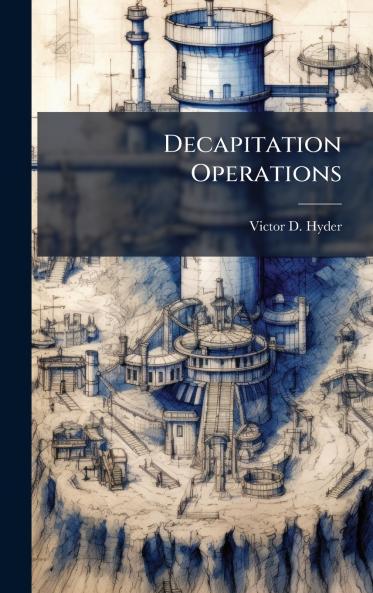
<p>This monograph establishes criteria for targeting enemy leadership during decapitation operations. It analyzes United States operations targeting strategic individuals over the course of the Twentieth Century. This discussion creates a list of recommended standards for the military commander to consider while planning decapitation operations. The paper addresses the following subquestions in order to answer the primary research question: When are decapitation operations beneficial to achieving the desired end state? 1) What is a strategic individual? 2) What types of political or military frameworks are susceptible to decapitation? 3) How does United States military doctrine address decapitation operations? 4) What decapitation operations has the United States conducted in the past? 5) What was the result of these past operations? 6) What criteria must be met for a campaign to benefit from targeting enemy leadership? Five US decapitation operations conducted over a ninety-two year span provided historical precedence to answer the above questions. The five case studies are: 1) General Emilio Aguinaldo Philippines 1901 2) Francisco Pancho Villa Mexico 1916 3) Admiral Isoroku Yamamoto Japan 1943 4) General Manuel A. Noriega Panama 1989 5) Pablo Escobar Colombia 1993. These strategic individuals were chosen for this study because they represent a century of US activity targeting enemy leadership. The occurrences are evenly distributed over the course of the past one hundred years and involve some of the most recent developments in the conduct of warfare and the influence of global mass communications relative to manhunting. Also affecting the choice of these cases was the availability and quality of unclassified information. Not all of the chosen cases were conducted for military reasons and not all were completely successful. These variances in outcome timeframe and motive add variety and validity to the paper 's conclusions found in the final chapter. The</p><p>This work has been selected by scholars as being culturally important and is part of the knowledge base of civilization as we know it. This work was reproduced from the original artifact and remains as true to the original work as possible. Therefore you will see the original copyright references library stamps (as most of these works have been housed in our most important libraries around the world) and other notations in the work.</p><p>This work is in the public domain in the United States of America and possibly other nations. Within the United States you may freely copy and distribute this work as no entity (individual or corporate) has a copyright on the body of the work.</p><p>As a reproduction of a historical artifact this work may contain missing or blurred pages poor pictures errant marks etc. Scholars believe and we concur that this work is important enough to be preserved reproduced and made generally available to the public. We appreciate your support of the preservation process and thank you for being an important part of keeping this knowledge alive and relevant.</p><br>

Piracy-free

Assured Quality

Secure Transactions

Fast Delivery

Sustainably Printed
Details
ISBN 13
9781025101477
Publication Date
-22-05-2025
Pages
-76
Weight
-214 grams
Dimensions
-156x234x6.35 mm
