







Paperback
₹359
₹599
40.07% OFF
(All inclusive*)
Delivery Options
Please enter pincode to check delivery time.
*COD & Shipping Charges may apply on certain items.
Review final details at checkout.
Looking to place a bulk order? SUBMIT DETAILS

Piracy-free

Assured Quality

Secure Transactions
About The Book
Description
Author
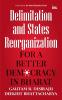
A feature of any modern democracy is that each vote cast freely has the same value. This however is not true of India today because of an abnormal delimitation freeze for the last 50 years. This anomaly is magnified by the greatly differing sizes of the constituent states which is an outcome of historical accident and political short-termism. To strengthen democracy two important changes in polity need to be simultaneously implemented: delimitation and redrawing of state boundaries; one needs the other to make the exercise viable. There is a direct relationship between delimitation and parity in the Union of India’s relations with its constituent states particularly when it comes to economic issues. In an ideal world no state should matter more or less to the Union. However Goa and Bihar for example are treated differently by the central government. If the populations of the states are roughly the same this would not happen and in such a situation regardless of which party is in power at the Centre delimitation would be a seamless continuous process with roughly equal state representation in the parliament with the value of each vote in sending a member to the Lok Sabha being the same. Smaller states are not a novel concept. Nevertheless there have been very few thorough explorations of the reasons why states should be uniformly small and no attempt has been made to tie these arguments to constituency delimitation. This has created a number of urgent economic problems with regard to equality and efficiency. The proposed solution to these problems is expected to lay the ground for a fair electoral procedure and governance system leading to a better democracy in Bharat.
Piracy-free
Assured Quality
Secure Transactions
Delivery Options
Please enter pincode to check delivery time.
*COD & Shipping Charges may apply on certain items.
Review final details at checkout.
Details
ISBN 13
9789365478426
Publication Date
-27-01-2025
Pages
-275
Weight
-311 grams
Dimensions
-135x213x15.35 mm
