




Paperback
₹1756
₹1848
4.98% OFF
(All inclusive*)
Delivery Options
Please enter pincode to check delivery time.
*COD & Shipping Charges may apply on certain items.
Review final details at checkout.
Looking to place a bulk order? SUBMIT DETAILS

Piracy-free

Assured Quality

Secure Transactions
About The Book
Description
Author(s)
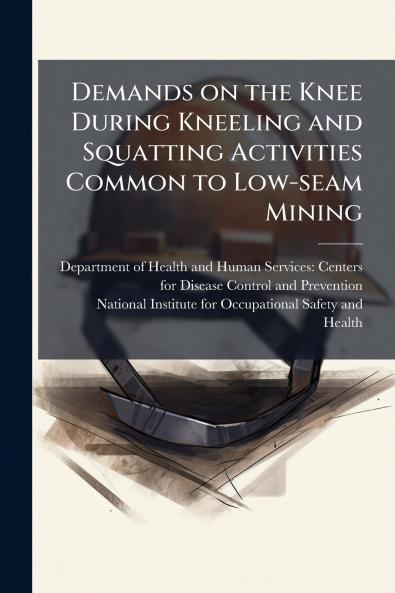
<p>In 2009 the operating height of approximately one fourth of underground coal mines in the U.S. restricted mine workers to kneeling crawling and/or stooping posture to perform work [MSHA 2009). The large number of knee injuries to these workers is likely attributed to exposure to musculoskeletal disorder risk factors (prolonged kneeling crawling and twisting on one's knees). Therefore the National Institute for Occupational Safety and Health has investigated three different biomechanical parameters (muscle activity of the knee flexors and extensors pressure at the knee and the net forces and moments at the knee) as subjects assumed postures common to low-seam mining both with and without kneepads. The postures evaluated included: (I) kneeling near full flexion; (2) kneeling near 90 degrees of knee flexion; (3) kneeling on one knee; and (4) squatting. The pressure and the net forces and moments at the knee were evaluated as subjects statically assumed these postures. However negligible muscle activity existed for these static postures. Therefore muscle activity of the knee flexors and extensors was evaluated for each posture while subjects performed a lateral lift that is common to low-seam mining where they lifted a 25-lb block from their right side transferred it across their body and placed it on the ground on their left side. The results indicated that relative to the stresses posed by other kneeling postures some postures had may have more detrimental effects than others. Considering the potential impact of the three biomechanical parameters several key recommendations were made regarding when it may be most appropriate to use specific postures. Additional recommendations were also made regarding the design of kneepads.</p><p>This work has been selected by scholars as being culturally important and is part of the knowledge base of civilization as we know it. This work was reproduced from the original artifact and remains as true to the original work as possible. Therefore you will see the original copyright references library stamps (as most of these works have been housed in our most important libraries around the world) and other notations in the work.</p><p>This work is in the public domain in the United States of America and possibly other nations. Within the United States you may freely copy and distribute this work as no entity (individual or corporate) has a copyright on the body of the work.</p><p>As a reproduction of a historical artifact this work may contain missing or blurred pages poor pictures errant marks etc. Scholars believe and we concur that this work is important enough to be preserved reproduced and made generally available to the public. We appreciate your support of the preservation process and thank you for being an important part of keeping this knowledge alive and relevant.</p>
Piracy-free
Assured Quality
Secure Transactions
Delivery Options
Please enter pincode to check delivery time.
*COD & Shipping Charges may apply on certain items.
Review final details at checkout.
Details
ISBN 13
9781297048012
Publication Date
-16-02-2015
Pages
-56
Weight
-95 grams
Dimensions
-156x234x3.58 mm
