



English





₹1818
₹1905
4.57% OFF
(All inclusive*)
Paperback
Delivery Options
Please enter pincode to check delivery time.
*COD & Shipping Charges may apply on certain items.
Review final details at checkout.
Looking to place a bulk order? SUBMIT DETAILS
Delivery Options
Please enter pincode to check delivery time.
*COD & Shipping Charges may apply on certain items.
Review final details at checkout.
About The Book
Description
Author
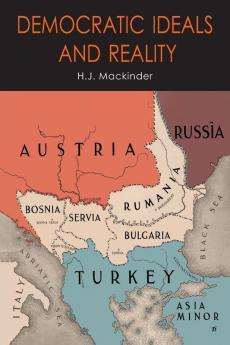
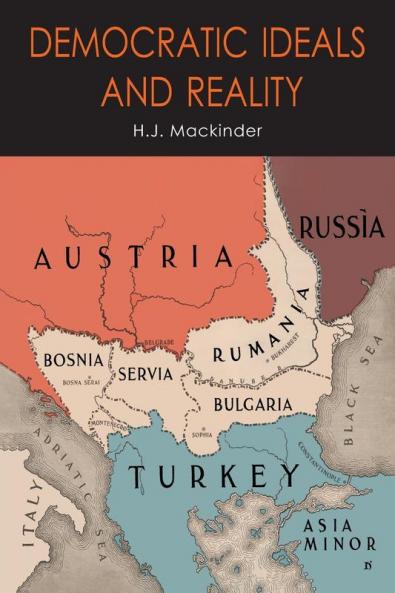
<p>2022 Reprint of the 1919 Edition. Exact facsimile of the original edition and not reproduced with Optical Recognition Software.&nbsp;Studying the prerequisites for a stable peace settlement during World War I the author developed a thesis in political geography that he had first outlined in a paper read to the Royal Geographical Society in 1904 <em>The Geographical Pivot of History.</em> In it he argued that interior Asia and eastern Europe (the heartland) had become the strategic center of the World Island as a result of the relative decline of sea power as against land power and of the economic and industrial development of southern Siberia. &nbsp;His extended views were set out in a short book <em>Democratic Ideals and Reality</em> published early in 1919 while the Paris Peace Conference was in session. The role of Britain and the United States he considered was to preserve a balance between the powers contending for control of this heartland. As a further stabilizing factor he urged the creation of a tier of independent states to separate Germany and Russia much along the lines finally imposed by the peace treaty. The book included apart from the main theme many farsighted observations-e.g. his insistence on the one world concept the need for regional organizations of minor powers and the warning that chaos in a defeated Germany would inevitably lead to dictatorship. The book attracted little attention in Britain but rather more in the United States.</p><p>Contents: Perspective. -- Social momentum. -- The seaman's point of view. -- The landsman's point of view. -- The rivalry of empires. -- The freedom of nations. -- The freedom of men. -- Postscript. -- Appendix: Note on an incident at the Quai d'Orsay 25th January 1919. -- Index.</p>

Piracy-free

Assured Quality

Secure Transactions

Fast Delivery

Sustainably Printed
Details
ISBN 13
9781684226931
Publication Date
-25-04-2022
Pages
-280
Weight
-383 grams
Dimensions
-152x229x16.03 mm
