

English


Hardback
₹20512
₹23970
14.43% OFF
(All inclusive*)
Delivery Options
Please enter pincode to check delivery time.
*COD & Shipping Charges may apply on certain items.
Review final details at checkout.
Looking to place a bulk order? SUBMIT DETAILS

Piracy-free

Assured Quality

Secure Transactions
About The Book
Description
Author
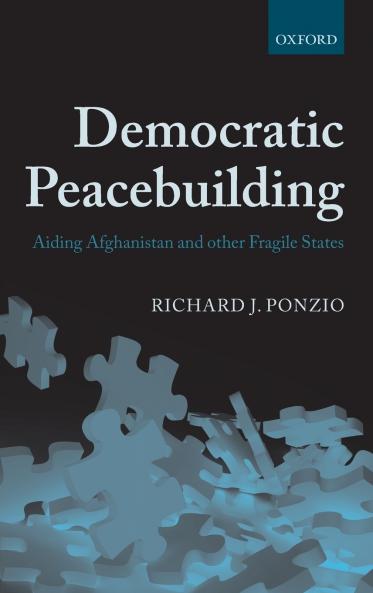
In a growing number of instances after the cold war the United Nations and other international actors have sought to rebuild or establish new political institutions in states or territories recovering from violent conflict. From Afghanistan Iraq and the western Balkans to less prominent wars in Africa Asia the Caribbean Central America and the South Pacific the international community's response involves extensive intrusions into the domestic affairs of sovereign states. Extending beyond the narrow mandates of traditional peacekeeping and humanitarian relief operations these interventions aspire to reconstitute local power within a democratic framework. Democratic Peacebuilding examines the evolution of international peacebuilding during this tumultuous period identifying the factors that limit the progress of international actors to institutionalize democratic authority and the rule of law in war-shattered societies. <BR>Based on extensive field research the book gives particular attention to Afghanistan's Bonn Agreement process (2001-2005) and Post-Bonn period (2006-2009) in which the country's multiple competing forms of authority (e.g. religious leaders tribal elders militia commanders and technocrats) challenged efforts to create modern forms of political authority rooted in democratic norms and the rule of law. Despite the significant risks involved Democratic Peacebuilding argues that the institutionalization of democratic legal authority can create the conditions and framework necessary to mediate competing domestic interests and to address the root causes of a conflict peacefully. At the same time one overlooked problem of international peacebuilding stems from the divergent conceptions between international officials and the local population of authority and its sources of legitimacy. By helping a conflict-affected society reconcile the inherent tensions between competing forms of authority and over time deepen democracy--rather than lower the metrics for progress and conditions for exit international peacebuilders can contribute to improved conditions for governance and a reduction in intra-state political violence. This examination of the peacebuilding-democratization nexus in war-torn societies aims to generate new insights for scholars policy-makers and practitioners in both the study and practice of politics and international relations.<BR>
Piracy-free
Assured Quality
Secure Transactions
Delivery Options
Please enter pincode to check delivery time.
*COD & Shipping Charges may apply on certain items.
Review final details at checkout.
Details
ISBN 13
9780199594955
Publication Date
-27-01-2011
Pages
-314
Weight
-540 grams
Dimensions
-156x234x19.05 mm
