

English


Paperback
₹5352
(All inclusive*)
Delivery Options
Please enter pincode to check delivery time.
*COD & Shipping Charges may apply on certain items.
Review final details at checkout.
Looking to place a bulk order? SUBMIT DETAILS
Delivery Options
Please enter pincode to check delivery time.
*COD & Shipping Charges may apply on certain items.
Review final details at checkout.
About The Book
Description
Author
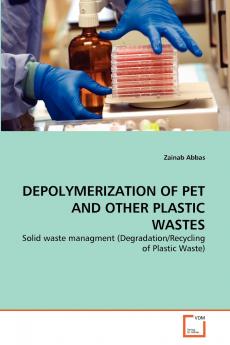
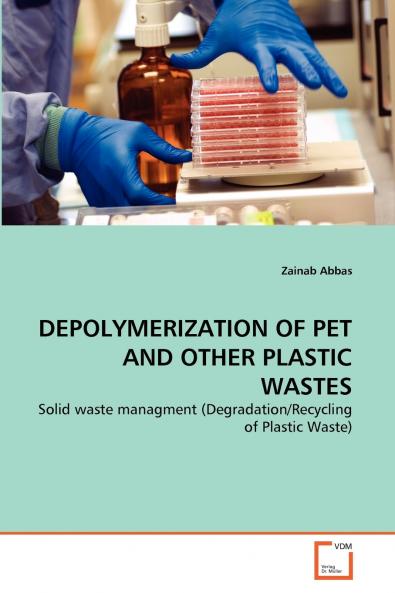
A comparative study of hydrolysis of PET waste and other plastic waste ( compact disc. Polyethelene polystyrene) has been carried out under various reaction conditions. PET was hydrolyzed with sodium hydroxide in different solvents at reflux as well as by fusion in solventless conditions at atmospheric pressure. Best results were obtained when PET chips were heated to dryness with sodium hydroxide in minimum amount of water. A 98% yield of terephthalic acid was obtained in ten minutes. Hydrolysis with aqueous ammonia was not promising. Acid hydrolysis with nitric acid also provided 97% yield of the terephthalic acid. The basic hydrolysis of the PET waste (in a minimum amount of water) is being recommended as preferred method for the formation of terephthalic acid. In another study compact disc were also recycled by fusion with sodium hydroxide to get bisphenol-A. 60 % yield of bisphenol A was obtained. Polyethylene and polystyrene wastes were recycled by acid hydrolysis and distillation processes.

Piracy-free

Assured Quality

Secure Transactions

Fast Delivery

Sustainably Printed
Details
ISBN 13
9783639303759
Publication Date
-15-12-2010
Pages
-88
Weight
-132 grams
Dimensions
-150x220x5.12 mm
