


English



Hardback
₹16895
₹19160
11.82% OFF
(All inclusive*)
Delivery Options
Please enter pincode to check delivery time.
*COD & Shipping Charges may apply on certain items.
Review final details at checkout.
Looking to place a bulk order? SUBMIT DETAILS
Delivery Options
Please enter pincode to check delivery time.
*COD & Shipping Charges may apply on certain items.
Review final details at checkout.
About The Book
Description
Author
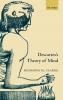
Descartes is commonly read as the paradigm defender of substance dualism a theory caricatured by Ryle as the ''dogma of the ghost in the machine''. On this reading mind and body are defined in such a way that they have no common properties that might help explain how they interact and it is therefore impossible to provide any account of precisely those features of human experience that this ''theory'' was meant to explain. Thus Descartes proposed an obvious dead-end and almost any beginner in philosophy can diagnose where he went wrong.Apart from its intrinsic implausibility Desmond Clarke offers good reasons for thinking that this cannot have been Descartes''s view. Descartes was an unrelenting critic of what Scholastics called ''substantial forms''. One cannot explain how we succed in thinking by saying simply that we have a thinking faculty. Cartesian objections to forms apply equally to substances. Descartes also argued that we know nothing about substances apart from their properties so that substances are not available as independent explanatory entities. Finally Descartes''s own efforts to explain sensations memory imagination or the passions all involve rather speculative accounts of how the brain and the central nervous system work.Clarke''s compelling and important new reading shows that a failure to engage with Descartes''s scientific work leads to a wholesale misunderstanding of his theory of mind. It will be of great interest to scholars and students of Descartes and throughout the philosophies of mind and science.

Piracy-free

Assured Quality

Secure Transactions

Fast Delivery

Sustainably Printed
Details
ISBN 13
9780199261239
Publication Date
-24-07-2003
Pages
-276
Weight
-488 grams
Dimensions
-156x234x17.46 mm
