


English


Paperback
₹6204
(All inclusive*)
Delivery Options
Please enter pincode to check delivery time.
*COD & Shipping Charges may apply on certain items.
Review final details at checkout.
Looking to place a bulk order? SUBMIT DETAILS

Piracy-free

Assured Quality

Secure Transactions
About The Book
Description
Author
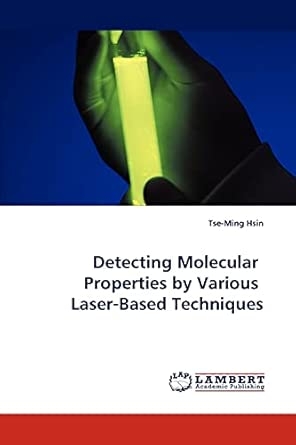
Four laser-based techniques were applied to study physical and chemical characteristics of bio- and dye molecules. They are hole burning spectroscopy (HBS) single molecule spectroscopy (SMS) time-resolved coherent anti-Stokes Raman spectroscopy (TR-CARS) and laser-induced fluorescence (LIF) microscopy. Results from HBS and SMS suggested that two antenna states of PSI from cyanobacterium Synechocystis PCC 6803 are connected by energy transfer (ET) and the ET time is 6 ps. Further results from HBS indicated that the chlorophyl dimer of the C714 state has a large distribution in the dimer geometry. Direct observation of vibration and evolution of coumarin 153 in the electronic excited state was demonstrated by using the fs/ps CARS a variation of TR-CARS. In three different solvents a vibration related to carbonyl group stretching exhibits different relaxation dynamics. LIF microscopy allows the measurement of the enzymatic activity of individual alkaline phosphatase in liposomes. The result without other interference showed a wide distribution of the enzyme reactivity. Protein structural variation is one of the main reasons that are responsible for the heterogeneous behavior.
Piracy-free
Assured Quality
Secure Transactions
Delivery Options
Please enter pincode to check delivery time.
*COD & Shipping Charges may apply on certain items.
Review final details at checkout.
Details
ISBN 13
9783838372419
Publication Date
-29-07-2010
Pages
-124
Weight
-171 grams
Dimensions
-150x220x6.97 mm
