



Paperback
₹1605
₹1722
6.79% OFF
(All inclusive*)
Delivery Options
Please enter pincode to check delivery time.
*COD & Shipping Charges may apply on certain items.
Review final details at checkout.
Looking to place a bulk order? SUBMIT DETAILS
Delivery Options
Please enter pincode to check delivery time.
*COD & Shipping Charges may apply on certain items.
Review final details at checkout.
About The Book
Description
Author(s)
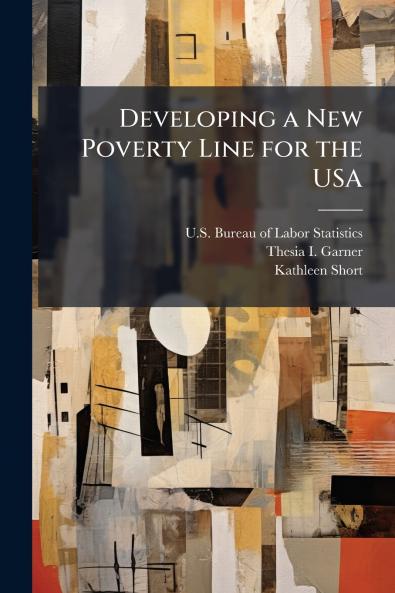
<p>This paper reviews a procedure that is being followed in the United States of America (USA) to experimentally test and evaluate recommendations made for redefining poverty measurement in that country. The recommendations were made in 1995 by the US National Academy of Sciences (NAS) Panel on poverty measurement. In this paper these recommendations are reviewed and the impact of implementing the recommendations on measures of inequality and poverty are examined. In conclusion a discussion concerning possible lessons for India is provided.<br><br>The recommended poverty measure (based on new measures of thresholds and resources) is examined in terms of its impact on inequality statistics as well as poverty statistics and results are compared to similar statistics based on the official measure. The standard Gini index and three generalized entropy inequality measures are used to examine inequality. For the poverty analysis simple head count ratios poverty gaps and Foster-Greer-Thorbecke poverty measures are computed. Data from the 1991 U.S. Consumer Expenditure Survey (CE) Interview are used to produce the thresholds and data from the 1992 through 1997 Current Population Survey (CPS) and in some analyzes the 1991 panel of the Survey of Income and Program Participation (SIPP) are used to define resources.<br><br>The proposed measure produces a distribution of resources that is in general more equal than is the distribution of official income. The poverty analysis reveals that changes in the poverty rates based on the official and the experimental measures are similar over time. However poverty as measured by the NAS measure is greater than official poverty. The experimental poverty measure yields a poverty population that looks slightly more like the total U.S. population in terms of various demographic and socioeconomic characteristics than does the current official measure.</p><p>This work has been selected by scholars as being culturally important and is part of the knowledge base of civilization as we know it. This work was reproduced from the original artifact and remains as true to the original work as possible. Therefore you will see the original copyright references library stamps (as most of these works have been housed in our most important libraries around the world) and other notations in the work.</p><p>This work is in the public domain in the United States of America and possibly other nations. Within the United States you may freely copy and distribute this work as no entity (individual or corporate) has a copyright on the body of the work.</p><p>As a reproduction of a historical artifact this work may contain missing or blurred pages poor pictures errant marks etc. Scholars believe and we concur that this work is important enough to be preserved reproduced and made generally available to the public. We appreciate your support of the preservation process and thank you for being an important part of keeping this knowledge alive and relevant.</p>

Piracy-free

Assured Quality

Secure Transactions
Details
ISBN 13
9781297049705
Publication Date
-16-02-2015
Pages
-34
Weight
-65 grams
Dimensions
-156x234x2.45 mm
