


English



Paperback
₹5165
(All inclusive*)
Delivery Options
Please enter pincode to check delivery time.
*COD & Shipping Charges may apply on certain items.
Review final details at checkout.
Looking to place a bulk order? SUBMIT DETAILS

Piracy-free

Assured Quality

Secure Transactions
About The Book
Description
Author
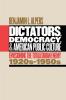
Focusing on portrayals of Mussolini&#x2019;s Italy Hitler&#x2019;s Germany and Stalin&#x2019;s Russia in U.S. films magazine and newspaper articles books plays speeches and other texts Benjamin Alpers traces changing American understandings of dictatorship from the late 1920s through the early years of the Cold War.<br/><br/>During the early 1930s most Americans' conception of dictatorship focused on the dictator. Whether viewed as heroic or horrific the dictator was represented as a figure of great masculine power and effectiveness. As the Great Depression gripped the United States a few people &#x2014; including conservative members of the press and some Hollywood filmmakers &#x2014; even dared to suggest that dictatorship might be the answer to America&#x2019;s social problems.<br/><br/>In the late 1930s American explanations of dictatorship shifted focus from individual leaders to the movements that empowered them. Totalitarianism became the image against which a view of democracy emphasizing tolerance and pluralism and disparaging mass movements developed. First used to describe dictatorships of both right and left the term &#x201C;totalitarianism&#x201D; fell out of use upon the U.S. entry into World War II. With the war&#x2019;s end and the collapse of the U.S.-Soviet alliance however concerns about totalitarianism lay the foundation for the emerging Cold War.
Piracy-free
Assured Quality
Secure Transactions
Delivery Options
Please enter pincode to check delivery time.
*COD & Shipping Charges may apply on certain items.
Review final details at checkout.
Details
ISBN 13
9780807854167
Publication Date
-20-01-2003
Pages
-418
Weight
-591 grams
Dimensions
-156x234x23.62 mm
