

English


Paperback
₹1915
₹2016
5.01% OFF
(All inclusive*)
Delivery Options
Please enter pincode to check delivery time.
*COD & Shipping Charges may apply on certain items.
Review final details at checkout.
Looking to place a bulk order? SUBMIT DETAILS

Piracy-free

Assured Quality

Secure Transactions
About The Book
Description
Author(s)
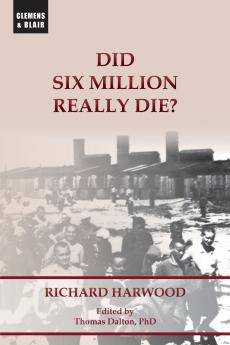
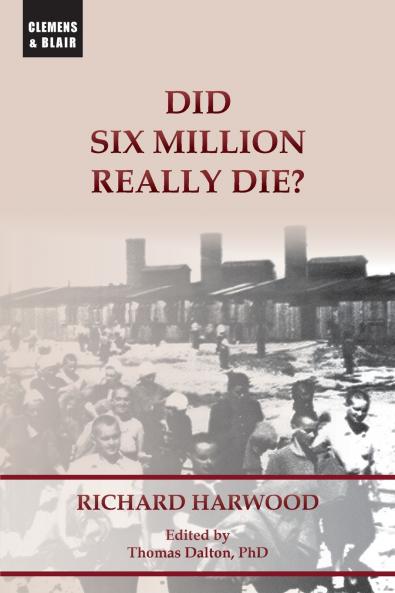
<p class=ql-align-justify><strong>A</strong>mong all topics of historical interest none seem to merit as much attention and controversy as the Holocaust. Ironically no topic is as poorly understood; distortion confusion and misinformation are the rule.</p><p class=ql-align-justify></p><p class=ql-align-justify>In the years after World War Two a few skeptics began to make serious inquiries into this topic and what they found contradicted the emerging consensus view of 6 million Jewish deaths many in specially-constructed gas chambers. One of these early skeptics was a British historian who went by the name Richard Harwood. Inspired by other early skeptics like David Hoggan and Paul Rassinier Harwood set out in the early 1970s to compose a concise book that would lay out the essence of a critical view of the conventional Holocaust.</p><p class=ql-align-justify></p><p class=ql-align-justify>Among other points Harwood determined that German policy during the war was one of forced emigration not mass killing; the infamous German camps served either as transit centers or labor camps not mass extermination; Hitler neither intended nor ordered the mass killing of Jews; and even if he wanted to the Germans could not have captured killed and disposed of 6 million people in the time claimed. Harwood also found that the alleged proofs of orthodox claims were either mistaken distorted or falsified.</p><p class=ql-align-justify></p><p class=ql-align-justify>This new edition of Harwood's classic 1974 work includes a new Foreword corrected text (in American English) and new explanatory footnotes. Some of his arguments and data have been surpassed by later scholarship of course but Harwood's central point remains as solid as ever: that the conventional Holocaust story is deficient on several counts and that a major reassessment is demanded.</p><p></p>
Piracy-free
Assured Quality
Secure Transactions
Delivery Options
Please enter pincode to check delivery time.
*COD & Shipping Charges may apply on certain items.
Review final details at checkout.
Details
ISBN 13
9781963143669
Publication Date
-05-04-2026
Pages
-124
Weight
-179 grams
Dimensions
-152x229x8.56 mm
