


This Book is Out of Stock!
English


Hardback
₹5573
₹6375
12.58% OFF
(All inclusive*)
Delivery Options
*COD & Shipping Charges may apply on certain items.
Review final details at checkout.
Looking to place a bulk order? SUBMIT DETAILS

Piracy-free

Assured Quality

Secure Transactions
About The Book
Description
Author
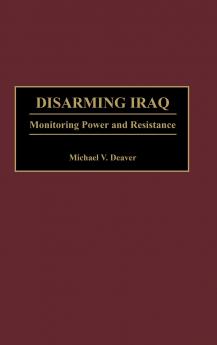
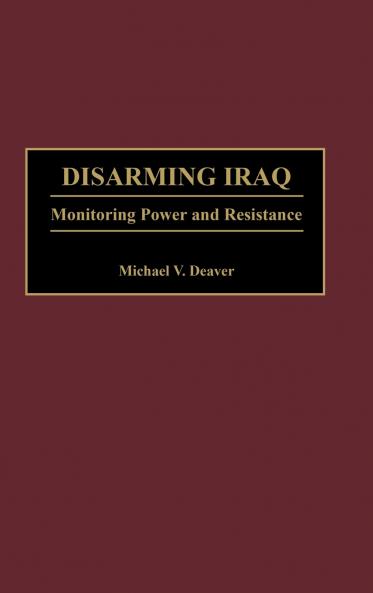
The implementation of disarmament requirements imposed by the Security Council after the Second Gulf War established a strong and unequal power relationship between the United Nations and Iraq. Although the ensuing struggle over imposed disarmament has been a major issue in world politics international relations theorists continue to ignore it. Deaver argues that this case has important theoretical implications. Using sociological insights and a behavioral approach he examines the power relationship as well as Iraqi resistance from 1991 to 1998. Theorists are likely to find these analytic tools useful since they provide a ready means of studying the micro-foundations of power relations in generalized terms.Behavior such as supervision surveillance inspection and monitoring are widespread and growing in world politics. A focus on tactics demonstrates the role of monitoring in maintaining and strengthening the relationship between the United Nations and Iraq. An analysis of dynamics makes comprehensible Iraqi losses of sovereignty and the eventual collapse of the relationship. Contrary to popular opinion whoever escalated tensions hurt their own cause: Iraqi resistance contributed greatly to United Nations gains while the United Nations successes led to the collapse of its relationship with Iraq.
Piracy-free
Assured Quality
Secure Transactions
*COD & Shipping Charges may apply on certain items.
Review final details at checkout.
₹5573
₹6375
12% OFF
Hardback
Out Of Stock
All inclusive*
Details
ISBN 13
9780275972615
Publication Date
-30-08-2001
Pages
-168
Weight
-340 grams
Dimensions
-156x234x11.11 mm
