

English


Paperback
₹3245
₹3569
9.08% OFF
(All inclusive*)
Delivery Options
Please enter pincode to check delivery time.
*COD & Shipping Charges may apply on certain items.
Review final details at checkout.
Looking to place a bulk order? SUBMIT DETAILS

Piracy-free

Assured Quality

Secure Transactions
About The Book
Description
Author(s)
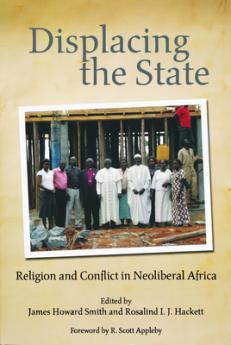
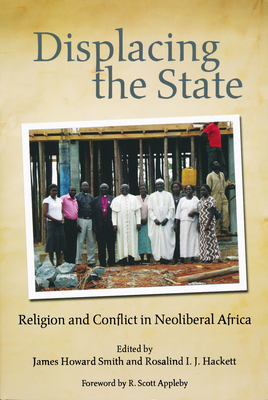
<p>In colonial Africa Christianity has often supported sustained and legitimated a violent process of governance. More recently however following decades of violence and oppression churches and religious organizations have mobilized African publics against corrupt and abusive regimes and facilitated new forms of reconciliation and cooperation. It is the purpose of <i>Displacing the State: Religion and Conflict in Neoliberal Africa</i> to illustrate the nature of religion's ambivalent power in Africa while suggesting new directions in the study of religion conflict and peace studies with a specific focus on sub-Saharan Africa. As the editors make clear most of the literature on conflict and peacebuilding in Africa has been concerned with dramatic conflicts such as genocide and war. In these studies conflictusually means a violent clash between parties with opposing interests while peace implies reconciliation and cooperation between these parties usually with a view to achieving a social order predicated on the idea of the sovereign national state whose hegemony is viewed as normative. The contributors argue that this perspective is inadequate for understanding the nature depth and persistence of conflict in Africa. In contrast the chapters in this volume adopt an ethnographic approach often focusing on mundane manifestations of both conflict and peace and in so doing draw attention to the ambiguities and ambivalences of conflict and peace in everyday life. The volume therefore focuses our attention on the extent to which everyday conflict contributes to subsequently larger and more highly visible clashes. Displacing the State makes two important contributions to the study of religion conflict and peacebuilding. First it shows how peace is conceptualized and negotiated in daily life often in ways that are counterintuitive and anything but peaceful. Second the volume uses African case studies to confront assumptions about the nature of the relationships among religion conflict and peace.</p> <p>Seldom have recent studies of African culture and politics directly treated 'religion and conflict' as such; <i>Displacing the State</i> remedies that omission. The authors collectively explore the ways religions and religious movements employ media gender roles social organizations and translocal cultural values to challenge reform and otherwise shape political culture and social structures. Their insightful contributions are sure to push the ongoing scholarly debate on the complex relationships among ethnicity religion governance and conflict in Africa. -R. Scott Appleby John M. Regan Jr. Director Kroc Institute for International Peace Studies University of Notre Dame</p>
Piracy-free
Assured Quality
Secure Transactions
Delivery Options
Please enter pincode to check delivery time.
*COD & Shipping Charges may apply on certain items.
Review final details at checkout.
Details
ISBN 13
9780268030957
Publication Date
-30-12-2011
Pages
-312
Weight
-425 grams
Dimensions
-152x229x16.59 mm
