

English


Paperback
₹3099
(All inclusive*)
Delivery Options
Please enter pincode to check delivery time.
*COD & Shipping Charges may apply on certain items.
Review final details at checkout.
Looking to place a bulk order? SUBMIT DETAILS
Delivery Options
Please enter pincode to check delivery time.
*COD & Shipping Charges may apply on certain items.
Review final details at checkout.
About The Book
Description
Author
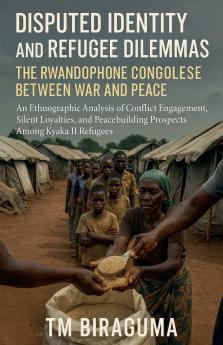
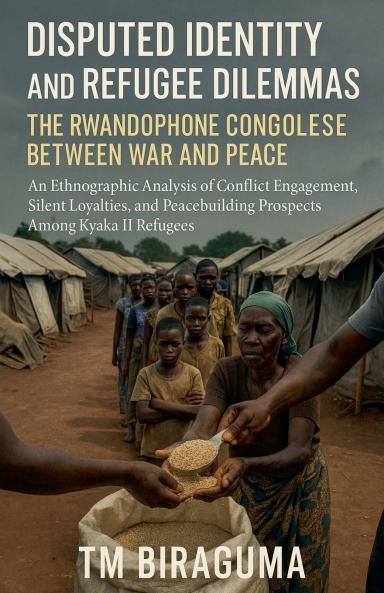
<p><strong>Disputed Identity and Refugee Dilemmas: The Rwandophone Congolese Between War and Peace</strong><br><em>An Ethnographic Analysis of Conflict Engagement Silent Loyalties and Peacebuilding Prospects Among Kyaka II Refugees</em></p><p>This in-depth ethnographic study offers a compelling exploration of the complex social and political dynamics shaping the lives of Rwandophone Congolese refugees in Uganda's Kyaka II Refugee Settlement. Drawing on extensive qualitative research - including participant observation interviews focus groups and document analysis - the book reveals how identity dilemmas historical trauma and regional geopolitics influence refugee experiences amid ongoing conflict and displacement.</p><p>Kyaka II emerges not just as a place of refuge but as a vibrant political and social microcosm where diverse refugee populations navigate informal survival networks community-led initiatives and the challenge of negotiating belonging across ethnic and linguistic divides. While local women's empowerment programs and youth platforms foster resilience and hope entrenched ethnic rivalries and language hierarchies continue to shape social fragmentation and mistrust within the settlement.</p><p>Crucially this work uncovers the shadowy realities of militarization and political manipulation within refugee spaces detailing how youth are targeted by covert recruitment networks tied to rebel movements and regional powers including Rwanda Burundi and Uganda. The book critically examines how these geopolitical actors extend their influence into refugee communities perpetuating cycles of conflict and forced migration.</p><p>Beyond conflict the study scrutinizes the roles of multinational corporations and peacekeeping missions highlighting the unintended consequences of resource extraction and humanitarian interventions. While aimed at stabilization these actors can inadvertently deepen economic inequality foster dependency and fuel political disillusionment among refugees.</p><p>Spanning nine thematic chapters the analysis culminates in a policy-oriented peacebuilding framework emphasizing political neutrality refugee agency and youth-led community-based initiatives as cornerstones for durable peace and governance reform. By interrogating identity militarization and the instrumentalization of refugees this research makes a significant contribution to critical debates on regional stability postcolonial citizenship and the future of peacebuilding in the Great Lakes region.</p><p><strong>Key Themes:</strong></p><ul><li>Rwandophone Congolese refugees and identity dilemmas</li><li>Political manipulation and militarization of refugee spaces</li><li>Social fragmentation ethnic rivalries and community resilience</li><li>Regional geopolitics and the influence of Rwanda Burundi Uganda</li><li>The impact of multinational corporations and peacekeeping missions</li><li>Policy recommendations for refugee governance and peacebuilding</li><li>Youth engagement and empowerment within refugee communities</li></ul><p>This book is essential reading for scholars policymakers humanitarian practitioners and anyone interested in refugee studies conflict resolution African geopolitics and postcolonial social dynamics.</p><p><strong>Keywords:</strong> Refugees Displacement Militarization Peacebuilding Great Lakes Region Ethnography Political Science Social Dynamics East and Central Africa Humanitarian Governance.</p>

Piracy-free

Assured Quality

Secure Transactions

Fast Delivery

Sustainably Printed
Details
ISBN 13
9798231019717
Publication Date
-20-05-2025
Pages
-418
Weight
-490 grams
Dimensions
-140x216x23.62 mm
