

English


Paperback
₹3638
₹4687
22.38% OFF
(All inclusive*)
Delivery Options
Please enter pincode to check delivery time.
*COD & Shipping Charges may apply on certain items.
Review final details at checkout.
Looking to place a bulk order? SUBMIT DETAILS
Delivery Options
Please enter pincode to check delivery time.
*COD & Shipping Charges may apply on certain items.
Review final details at checkout.
About The Book
Description
Author
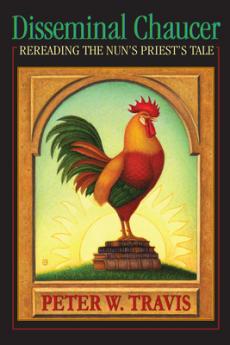
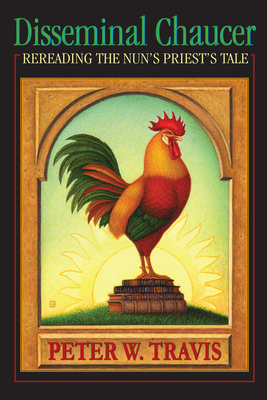
<p>Chaucer's <i>The Nun's Priest's Tale</i> is one of the most popular of <i>The Canterbury Tales</i>. It is only 646 lines long yet it contains elements of a beast fable an <i>exemplum</i> a satire and other genres. There have been countless attempts to articulate the real meaning of the tale but it has confounded the critics. Peter Travis contends that part of the fun and part of the frustration of trying to interpret the tale has to do with Chaucer's use of the tale to demonstrate the resistance of all literature to traditional critical practices. But the world of <i>The Nun's Priest's Tale</i> is so creative and so quintessentially Chaucerian that critics persist in writing about it. No one has followed the critical fortunes of Chauntecleer and his companions more closely over time than Peter Travis. One of the most important contributions of this book is his assessment of the tale's reception. Travis also provides an admirable discussion of genre: his analysis of parody and Menippean satire clarify how to approach works such as this tale that take pleasure in resisting traditional generic classifications. Travis also demonstrates that the tale deliberately invoked its readers' memories of specific grammar school literary assignments and the tale thus becomes a miniaturized synopticon of western learning. Building on these analyses and insights Travis's final argument is that <i>The Nun's Priest's Tale</i> is Chaucer's premier work of self-parody an ironic <i>apologia pro sua arte</i>. The most profound matters foregrounded in the tale are not advertisements of the poet's achievements. Rather they are poetic problems that Chaucer wrestled with from the beginning of his career and at the end of that career wanted to address in a concentrated experimental and parapoetic way.</p> <p>Peter Travis opens the Pandora's box that is Chaucer's <i>The Nun's Priest's Tale</i> by asking a disarmingly simple question about its genre. He proceeds to detail brilliantly the narrative's status as a multiplex parody a medieval <i>Ulysses</i>. By refusing to reduce the tale to a singular meaning and by maintaining that its proliferative ardors are part of its formal structure Travis provides a tour de force analysis not only of the work but of Chaucer's ambitions throughout <i>The Canterbury Tales</i>. Lucid engaging and great fun to read <i>Disseminal Chaucer</i> provides a compelling model for doing theory-savvy work that is scrupulously attentive to medieval textuality. --Jeffrey J. Cohen George Washington University</p> <p>Travis performs the difficult feat of remaining continually aware of Chaucer's comedy while taking seriously the pedagogical system Chaucer is parodying. His rich book provides a genuine and valuable introduction to medieval practices of reading and writing and at the same time takes us deep into Chaucer's thinking about poetry. --Winthrop Wetherbee Cornell University</p> <p>Peter Travis's long-awaited study of <i>The Nun's Priest's Tale</i> is without a doubt the most comprehensive and thorough treatment of the tale that we have or are ever likely to have. It is a bravura performance an extremely well argued study that marks it as a significant contribution to Chaucer studies one that will be closely read and consulted by both students and scholars of Chaucer alike. --Jim Rhodes Southern Connecticut State University</p> <p><i>Disseminal Chaucer</i> is an original work of criticism that breaks new ground in its treatment of <i>The Nun's Priest's Tale</i> both in its approach to the tale and in its perspective on Chaucer's poetry as a whole. It is historicist based which places it in the mainstream of current medieval practices but its background material and authoritative reading will make it fresh and current for a very long time. --Larry Scanlon Rutgers University</p>

Piracy-free

Assured Quality

Secure Transactions

Fast Delivery

Sustainably Printed
Details
ISBN 13
9780268042356
Publication Date
-15-11-2009
Pages
-458
Weight
-616 grams
Dimensions
-152x229x23.5 mm
