

English


Paperback
₹1661
₹1673
0.72% OFF
(All inclusive*)
Delivery Options
Please enter pincode to check delivery time.
*COD & Shipping Charges may apply on certain items.
Review final details at checkout.
Looking to place a bulk order? SUBMIT DETAILS

Piracy-free

Assured Quality

Secure Transactions
About The Book
Description
Author(s)
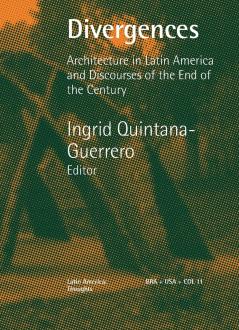
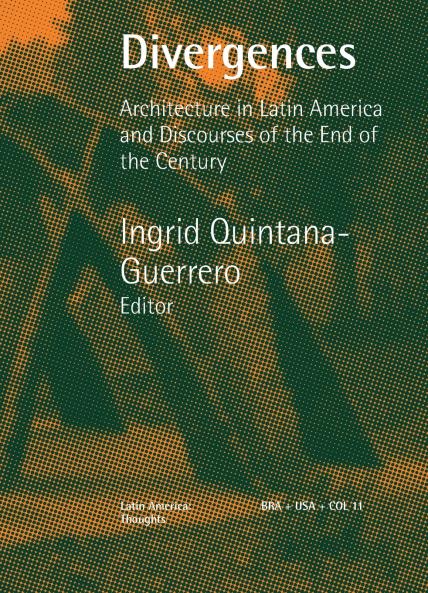
<p>Thinking about the ethos of contemporary Latin American architecture leads to identifying broad and flexible study categories. The position that contemporarily recognizes osmosis hybridization - García Canclini's concept whose erroneous assimilation in architecture has been criticized by Felipe Hernández - and trans-modernity - according to Argentine Enrique Dussel - disengages in many moralizing (and polar-izing!) academic works from the beginning of the second decade of the twenty-first century. It poses a fictitious situa-tion. In the words of Silvia Rivera-Cusicanqui what happens in our territory is not a miscegenation but a coexistence of heterogeneous phenomena (around the colonizer and the colonized) that do not aspire to fuse nor produce new terms. However considering that precolonial America was not homogeneous a priori this coexistence (or overlap) of several Latin Americas might be the original condition of our subcontinent.</p><p>Amid the undeniable coexistence of multiple Latin American realities and without detracting from the just claims of the indigenous' vindication in the intellectual and physical construction of our territory negotiation is funda-mental. This word mainly in war conflict scenarios implies tolerance and mutual surrender to achieve conciliation and avoid the oppressive tendency of those who Tuck and Wayne Yang call empowered postcolonial subjects. In my opinion this conciliatory attempt is present in most intellectual constructions of Latin American architecture during the threshold of the immediate previous century. Many contem-porary academics are not open today to this negotiation under the pretext of repeating the colonizing cycle. However it seems to me still necessary in the light of Santiago Castro-Gómez's thesis for whom only by radicalizing universality that is universalizing its 'point of exclusion' can the decol-onizing movement achieve its objectives. Castro-Gómez's proposal implies a recognition of the vulnerability of the other whether white black or indigenous and of that which minimally reverberates from its ethos (despite Rivera's affir-mation) in our current architectural thinking and making.</p><p>It is in this context of coexistence and negotiation not only between native cultures and North Atlantic Treaty Organization - NATO-centric doctrines but between diverse Latin American imaginaries that collide in sometimes violent and sometimes fortunate ways- that the architectural discourses enunciated in this book unfold. Given the scarcity of works that transversally address the discursive panorama of contemporary Latin American architecture particularly in the twilight of the twentieth century my purpose as co-author and editor is to elaborate a retrospective and unsuspecting exercise from which through divergent Latin American voices common discursive lines emerge.</p>
Piracy-free
Assured Quality
Secure Transactions
Delivery Options
Please enter pincode to check delivery time.
*COD & Shipping Charges may apply on certain items.
Review final details at checkout.
Details
ISBN 13
9786587205304
Publication Date
-29-06-2024
Pages
-182
Weight
-172 grams
Dimensions
-130x180x9.84 mm
