

English


Hardback
₹19246
₹22222
13.39% OFF
(All inclusive*)
Delivery Options
Please enter pincode to check delivery time.
*COD & Shipping Charges may apply on certain items.
Review final details at checkout.
Looking to place a bulk order? SUBMIT DETAILS
Delivery Options
Please enter pincode to check delivery time.
*COD & Shipping Charges may apply on certain items.
Review final details at checkout.
About The Book
Description
Author(s)
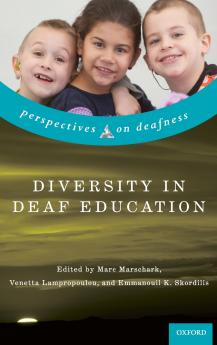
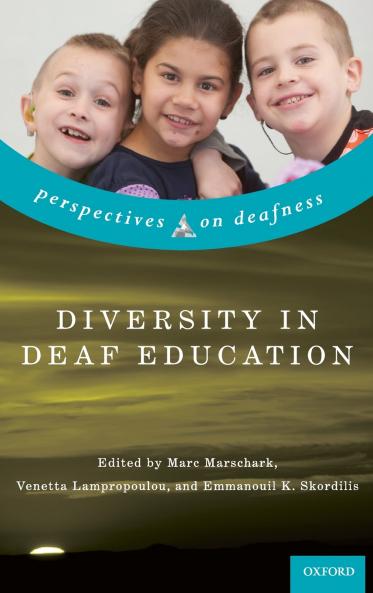
Deaf children are not hearing children who can't hear. Beyond any specific effects of hearing loss as a group they are far more diverse than hearing peers. Lack of full access to language incidental learning and social interactions as well as the possibility of secondary disabilities means that deaf learners face a variety of challenges in academic domains. Technological innovations such as digital hearing aids and cochlear implants have improved hearing and the possibility of spoken language for many deaf learners but parents teachers and other professionals are just now coming to recognize that there are cognitive experiential and social-emotional differences between deaf and hearing students likely to affect academic outcomes. Sign languages and schools and programs for deaf learners thus remain an important part of the continuum of services needed for this diverse population. Understanding such diversity and determining ways in which to accommodate them must become a top priority in educating deaf learners. <p/>Through the participation of an international interdisciplinary set of scholars <em>Diversity in Deaf Education</em> takes a broad view of learning and academic progress considering the whole child in the context of the families languages educational settings in which they are immersed. In adopting this perspective the complexities and commonalities in the social emotional cognitive and linguistic mosaic of which the deaf child is a part are captured. It is only through such a holistic consideration of diverse children developing within diverse settings that we can understand their academic potentials.<br>

Piracy-free

Assured Quality

Secure Transactions

Fast Delivery

Sustainably Printed
Details
ISBN 13
9780190493073
Publication Date
-28-06-2016
Pages
-568
Weight
-889 grams
Dimensions
-156x234x31.75 mm
