

English




Paperback
₹5109
₹6653
23.21% OFF
(All inclusive*)
Delivery Options
Please enter pincode to check delivery time.
*COD & Shipping Charges may apply on certain items.
Review final details at checkout.
Looking to place a bulk order? SUBMIT DETAILS

Piracy-free

Assured Quality

Secure Transactions
About The Book
Description
Author(s)
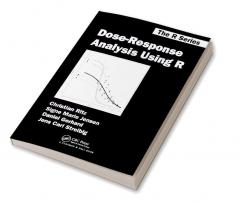
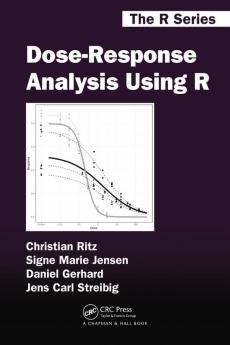
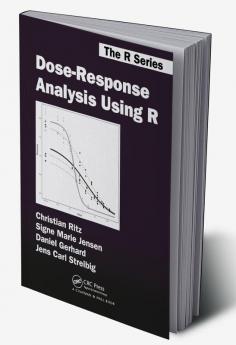
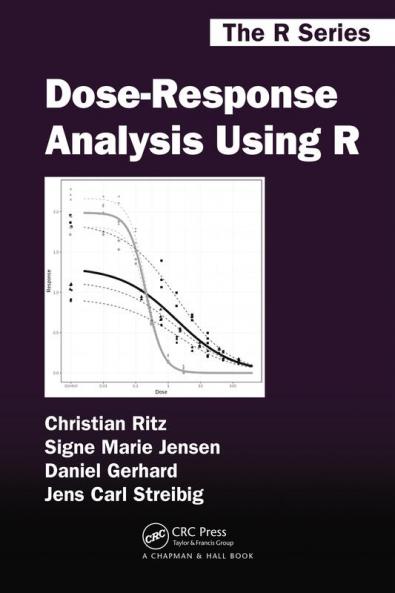
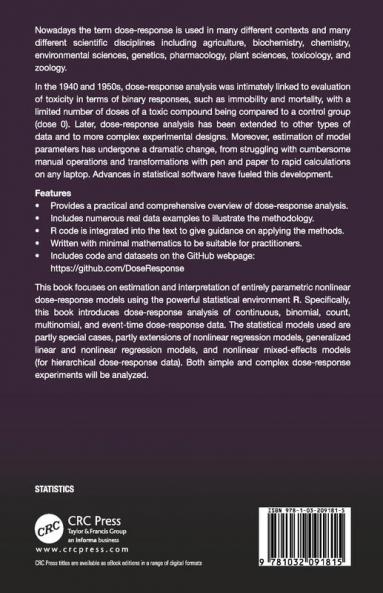
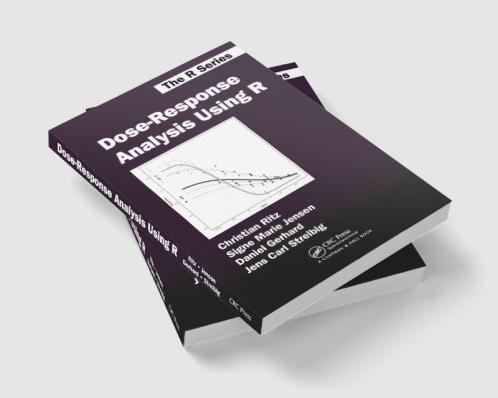
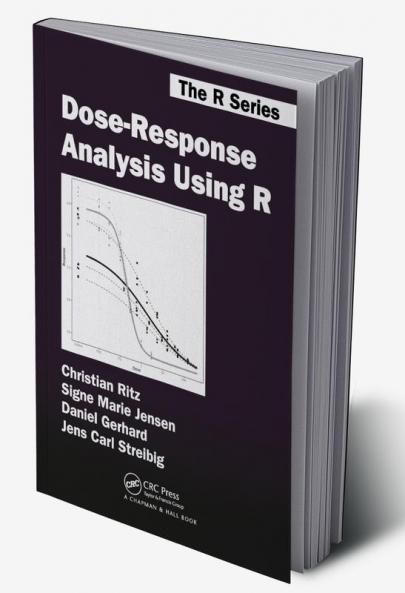
<p>Nowadays the term dose-response is used in many different contexts and many different scientific disciplines including agriculture biochemistry chemistry environmental sciences genetics pharmacology plant sciences toxicology and zoology.</p><p></p><p>In the 1940 and 1950s dose-response analysis was intimately linked to evaluation of toxicity in terms of binary responses such as immobility and mortality with a limited number of doses of a toxic compound being compared to a control group (dose 0). Later dose-response analysis has been extended to other types of data and to more complex experimental designs. Moreover estimation of model parameters has undergone a dramatic change from struggling with cumbersome manual operations and transformations with pen and paper to rapid calculations on any laptop. Advances in statistical software have fueled this development.</p><p></p><p>Key Features:</p><p></p><ul> <br><br><p></p> <li>Provides a practical and comprehensive overview of dose-response analysis. </li> <br><br> <br><br><p></p> <li>Includes numerous real data examples to illustrate the methodology. </li> <br><br> <br><br><p></p> <li>R code is integrated into the text to give guidance on applying the methods. </li> <br><br> <br><br><p></p> <li>Written with minimal mathematics to be suitable for practitioners. </li> <br><br> <br><br><p></p> <li>Includes code and datasets on the book’s GitHub: <a href=https://github.com/DoseResponse>https://github.com/DoseResponse.</a> </li> <br><br> </ul><p></p><p>This book focuses on estimation and interpretation of entirely parametric nonlinear dose-response models using the powerful statistical environment R. Specifically this book introduces dose-response analysis of continuous binomial count multinomial and event-time dose-response data. The statistical models used are partly special cases partly extensions of nonlinear regression models generalized linear and nonlinear regression models and nonlinear mixed-effects models (for hierarchical dose-response data). Both simple and complex dose-response experiments will be analyzed.</p>
Piracy-free
Assured Quality
Secure Transactions
Delivery Options
Please enter pincode to check delivery time.
*COD & Shipping Charges may apply on certain items.
Review final details at checkout.
Details
ISBN 13
9781032091815
Publication Date
-30-06-2021
Pages
-226
Weight
-328 grams
Dimensions
-156x234x12.21 mm
