

by
Zhang Qi
English


Paperback
₹4195
(All inclusive*)
Delivery Options
Please enter pincode to check delivery time.
*COD & Shipping Charges may apply on certain items.
Review final details at checkout.
Looking to place a bulk order? SUBMIT DETAILS

Piracy-free

Assured Quality

Secure Transactions
About The Book
Description
Author
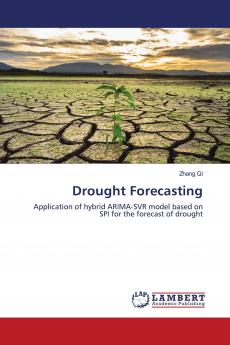
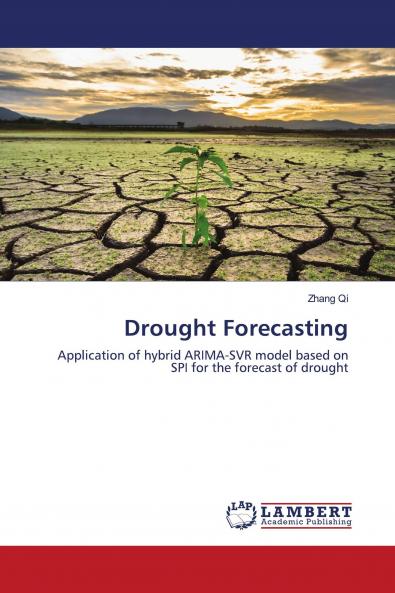
Drought forecasts could effectively reduce the risk of drought. Data-driven models are suitable forecast tools because of their minimal information requirements. The motivation for this study is that because most data-driven models such as autoregressive integrated moving average (ARIMA) models can capture linear relationships but cannot capture nonlinear relationships they are insufficient for long-term prediction.The hybrid ARIMA–support vector regression (SVR) model proposed in this paper is based on the advantages of a linear model and a nonlinear model. The multi scale standard precipitation indices (SPI:SPI1 SPI3 SPI6 and SPI12) were forecast and compared using the ARIMA model and the hybrid ARIMA–SVR model. The performance of all models was compared using measures of persistence such as the coefficient of determination root-mean-square error mean absolute error Nash–Sutcliffe coefficientand kriging interpolation method in the ArcGIS software.
Piracy-free
Assured Quality
Secure Transactions
Delivery Options
Please enter pincode to check delivery time.
*COD & Shipping Charges may apply on certain items.
Review final details at checkout.
Details
ISBN 13
9786202918657
Publication Date
-13-10-2020
Pages
-56
Weight
-90 grams
Dimensions
-150x220x3.48 mm
