


This Book is Out of Stock!
English


Paperback
₹3574
(All inclusive*)
Delivery Options
*COD & Shipping Charges may apply on certain items.
Review final details at checkout.
Looking to place a bulk order? SUBMIT DETAILS
*COD & Shipping Charges may apply on certain items.
Review final details at checkout.
₹3574
Out Of Stock
All inclusive*
About The Book
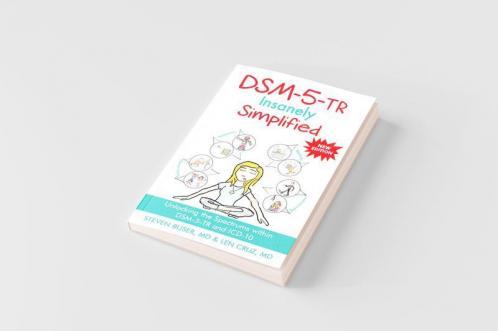
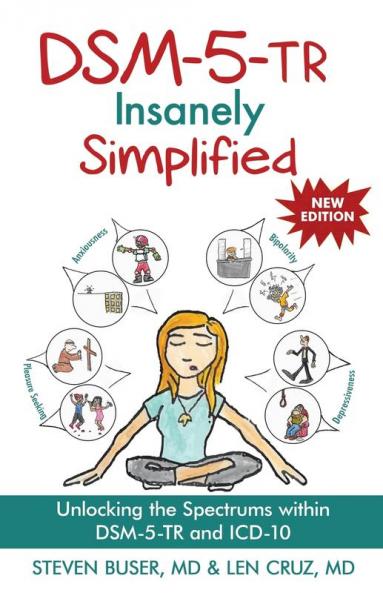
Description
Author(s)
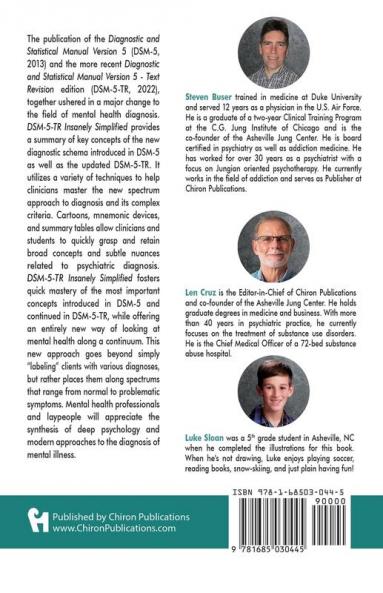
<p><strong style=color: rgba(0 0 0 1)>The publication of&nbsp;<em>the Diagnostic and Statistical Manual Version 5 </em>(DSM-5 2013) and the more recent<em> Diagnostic and Statistical Manual Version 5 - Text Revision </em>edition<em> </em>(DSM-5-TR 2022) together ushered in a major change to the field of mental health diagnosis.&nbsp;<em>DSM-5-TR Insanely Simplified</em>&nbsp;provides a summary of key concepts of the new diagnostic schema introduced in DSM-5 as well as the updated DSM-5-TR<em>.</em> It&nbsp;utilizes a variety of techniques to help clinicians master the new spectrum approach to diagnosis and its complex criteria. Cartoons mnemonic devices and summary tables allow clinicians and students to quickly grasp and retain broad concepts and subtle nuances related to psychiatric diagnosis.&nbsp;</strong></p><p><br></p><p><strong style=color: rgba(0 0 0 1)><em><span></span></em></strong><em style=color: rgba(0 0 0 1)>DSM-5-TR Insanely Simplified</em><span style=color: rgba(0 0 0 1)>&nbsp;fosters quick mastery of the most important concepts introduced in DSM-5 and continued in DSM-5-TR while</span><strong style=color: rgba(0 0 0 1)>&nbsp;</strong><span style=color: rgba(0 0 0 1)>offering an</span><strong style=color: rgba(0 0 0 1)>&nbsp;</strong><span style=color: rgba(0 0 0 1)>entirely new way of looking at mental health along a continuum</span><strong style=color: rgba(0 0 0 1)>.</strong><span style=color: rgba(0 0 0 1)>&nbsp;This new approach goes beyond simply labeling clients with various diagnoses but rather places them along spectrums that range from normal to problematic symptoms. Mental health professionals and laypeople will appreciate the synthesis of deep psychology and modern approaches to the diagnosis of mental illness.&nbsp;</span></p><p><br></p><p><strong>Table of Contents</strong></p><p><em>DSM-5-TR Summary Pages </em></p><p><strong>Section I: Overview</strong></p><p>1. Introduction</p><p>2. History of the DSM </p><p>3. What is new in DSM-5-TR </p><p>4. What was new in DSM-5 </p><p>5. The 8 Primary Psychiatric Spectrums of Mental Illness </p><p><strong>Section II: The 8 Primary Spectrums of Psychiatry </strong></p><p>6. The Depression Spectrum: Shallowness vs. Despair </p><p>7. The Mania Spectrum: Boring vs. Bipolar </p><p>8. The Anxiety Spectrum: Carelessness vs. Anxiousness </p><p>9. The Psychosis Spectrum: Visionless vs. Psychotic </p><p>10. The Focus Spectrum: Attention Deficit Disorder vs. Obsessive Compulsive Disorders </p><p>11. The Substance Abuse Spectrum: Ascetic vs. Addicted </p><p>12. The Autism Spectrum: Codependent vs. Autistic </p><p>13. The Personality Spectrum: Neurotic vs. Obnoxious </p><p><strong>Section III: The Secondary Areas of Diagnosis </strong></p><p>14. The Specialty Areas (Trauma Neurodevelopmental Neurocognitive Behavioral Dissociative Somatic Eating Elimination Sleep Sexual Gender Paraphilia) </p><p><strong>Section IV: Conclusions </strong></p><p>15. The Harmony of the Lotus Flower </p><p>16. Carl Jung and his Relationship to DSM-5-TR </p><p><strong>Appendix: On ICD-10 and the DSM-5-TR </strong></p><p><em>Endnotes </em></p><p><em style=color: rgba(0 0 0 1)>Index</em></p>

Piracy-free

Assured Quality

Secure Transactions

Fast Delivery

Sustainably Printed
Details
ISBN 13
9781685030445
Publication Date
-31-03-2022
Pages
-152
Weight
-188 grams
Dimensions
-140x216x8.41 mm
