


English



₹1688
₹1850
8.76% OFF
(All inclusive*)
Paperback
Delivery Options
Please enter pincode to check delivery time.
*COD & Shipping Charges may apply on certain items.
Review final details at checkout.
Looking to place a bulk order? SUBMIT DETAILS
Delivery Options
Please enter pincode to check delivery time.
*COD & Shipping Charges may apply on certain items.
Review final details at checkout.
About The Book
Description
Author
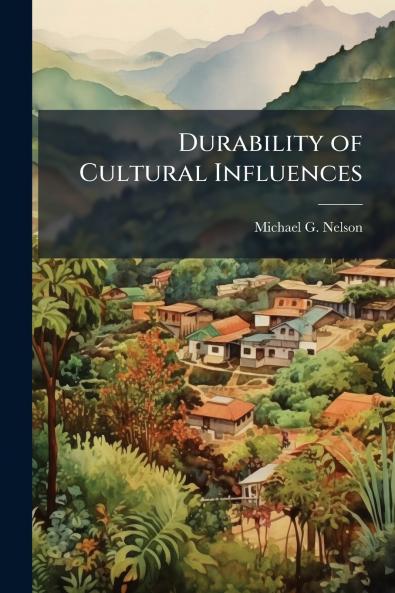
<p>A confluence of factors led to American engagement in one of Central America's most violent uprisings: the Salvadoran civil war. By the time of President Ronald Reagan's first term as president the civil war had created social political and economic fissures within the Salvadoran state; these fissures presented the United States the opportunity to promote its policy agenda with the Central American country. Reagan's administration however got off to a slow start; his first-term approaches to Salvadoran engagement yielded very little and may have actually exacerbated the negative influences affecting the state. This monograph attempts to portray the American and El Salvadoran relationship during Reagan's first term as one defined by strategic interactions. These interactions occurred when American policy attempted to modify the Salvadoran system. Without delving into specific initiatives the analysis will show how Reagan's administration was stimulated by distinct impulses or influences which not only encouraged engagement but also molded policy. Among those influences doctrinal precedents within the executive and the ideological leanings of President Reagan were the two areas that appeared to dominate Reagan's interaction with El Salvador. In order to succeed theses influences would have to accommodate elements of Salvadoran history and culture lest policy implementation fail. Unfortunately neither of those influences encouraged the administration to obtain a full understanding of the situation prior to or during policy implementation. When American policy interacted with Central American history and culture the resulting messages failed to resonate with the Salvadoran populace and efforts to change the system for the better fell flat. In the end while the American administration interpreted its engagement as purely legitimate and rational the Salvadoran body politic remained unconvinced the United States offered a better system of governance than the</p><p>This work has been selected by scholars as being culturally important and is part of the knowledge base of civilization as we know it. This work was reproduced from the original artifact and remains as true to the original work as possible. Therefore you will see the original copyright references library stamps (as most of these works have been housed in our most important libraries around the world) and other notations in the work.</p><p>This work is in the public domain in the United States of America and possibly other nations. Within the United States you may freely copy and distribute this work as no entity (individual or corporate) has a copyright on the body of the work.</p><p>As a reproduction of a historical artifact this work may contain missing or blurred pages poor pictures errant marks etc. Scholars believe and we concur that this work is important enough to be preserved reproduced and made generally available to the public. We appreciate your support of the preservation process and thank you for being an important part of keeping this knowledge alive and relevant.</p>

Piracy-free

Assured Quality

Secure Transactions

Fast Delivery

Sustainably Printed
Details
ISBN 13
9781288229338
Publication Date
-29-10-2012
Pages
-60
Weight
-100 grams
Dimensions
-156x234x3.26 mm
