


English


Hardback
₹13249
₹14936
11.29% OFF
(All inclusive*)
Delivery Options
Please enter pincode to check delivery time.
*COD & Shipping Charges may apply on certain items.
Review final details at checkout.
Looking to place a bulk order? SUBMIT DETAILS

Piracy-free

Assured Quality

Secure Transactions
About The Book
Description
Author
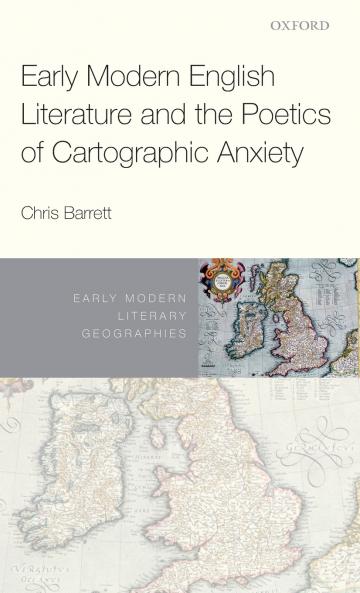
The Cartographic Revolution in the Renaissance made maps newly precise newly affordable and newly ubiquitous. In sixteenth-century Britain cartographic materials went from rarity to household decor within a single lifetime and they delighted inspired and fascinated people across the<br>socioeconomic spectrum. At the same time they also unsettled upset disturbed and sometimes angered their early modern readers. <em>Early Modern English Literature and the Poetics of Cartographic Anxiety</em> is the first monograph dedicated to recovering the shadow history of the many anxieties provoked<br>by early modern maps and mapping in the sixteenth and seventeenth centuries. <p/>A product of a military arms race often deployed for security and surveillance purposes and fundamentally distortive of their subjects maps provoked suspicion unease and even hostility in early modern Britain (in ways not dissimilar from the anxieties provoked by global positioning-enabled<br>digital mapping in the twenty-first century). At the same time writers saw in the resistance to cartographic logics and strategies the opportunity to rethink the way literature represents space--and everything else. This volume explores three major poems of the period--Edmund Spenser's <em>The Faerie</em><br><em>Queene</em> (1590 1596) Michael Drayton's <em>Poly-Olbion </em>(1612 1622) and John Milton's <em>Paradise Lost </em>(1667 1674)--in terms of their vexed and vexing relationships with cartographic materials and shows how the productive protest staged by these texts redefined concepts of allegory description <br>personification bibliographic materiality narrative temporality analogy and other elemental components of literary representations.<br>
Piracy-free
Assured Quality
Secure Transactions
Delivery Options
Please enter pincode to check delivery time.
*COD & Shipping Charges may apply on certain items.
Review final details at checkout.
Details
ISBN 13
9780198816874
Publication Date
-01-05-2018
Pages
-244
Weight
-368 grams
Dimensions
-140x216x14.29 mm
