


English



Paperback
₹4524
₹5245
13.75% OFF
(All inclusive*)
Delivery Options
Please enter pincode to check delivery time.
*COD & Shipping Charges may apply on certain items.
Review final details at checkout.
Looking to place a bulk order? SUBMIT DETAILS
Delivery Options
Please enter pincode to check delivery time.
*COD & Shipping Charges may apply on certain items.
Review final details at checkout.
About The Book
Description
Author(s)
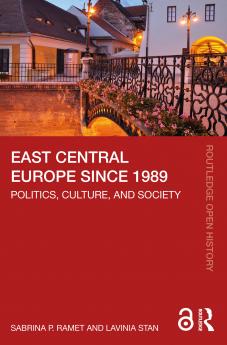
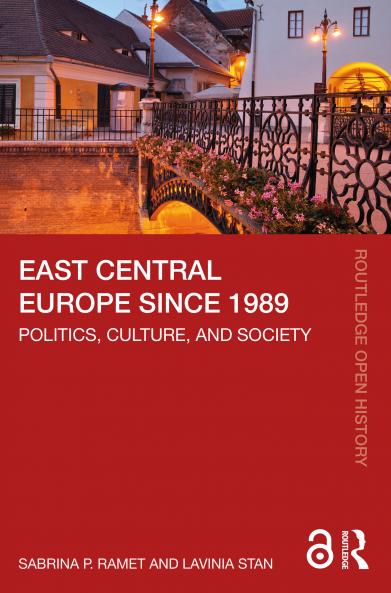
<p>This groundbreaking treatment of post-communist developments in East Central Europe examines politics economics media religious institutions transitional justice gender inequality and literature highlighting the overt functions latent functions and side effects associated with each sphere.</p><p>Communism in East Central Europe had cracks from the beginning as uprisings in East Germany in 1953 and Hungary in 1956 demonstrated. But with the establishment of the Independent Trade Union Solidarity in Poland in the Summer of 1980 communism went into steady decline and between 1988 and 1991 crumbled. What followed has been an unsteady transition to various forms of often corrupt pluralism with democracy doing best in the Czech Republic (with the exception of the years 2017–2021) and Slovenia and worst in Hungary Albania Serbia and Bosnia-Herzegovina. Drawing on the functionalist theory of Robert K. Merton the authors examine what policymakers – communist and post-communist – were or are trying to accomplish the intended and unintended results of these policies and the side-effects they have produced. </p><p>This volume will be of interest not only to specialists in East Central Europe but also to graduate and undergraduate students members of the diplomatic corps and general readers.</p>

Piracy-free

Assured Quality

Secure Transactions

Fast Delivery

Sustainably Printed
Details
ISBN 13
9781032319209
Publication Date
-12-12-2024
Pages
-408
Weight
-577 grams
Dimensions
-155.96x233.93x21.56 mm
