


English



₹1687
₹1846
8.61% OFF
(All inclusive*)
Paperback
Delivery Options
Please enter pincode to check delivery time.
*COD & Shipping Charges may apply on certain items.
Review final details at checkout.
Looking to place a bulk order? SUBMIT DETAILS
Delivery Options
Please enter pincode to check delivery time.
*COD & Shipping Charges may apply on certain items.
Review final details at checkout.
About The Book
Description
Author
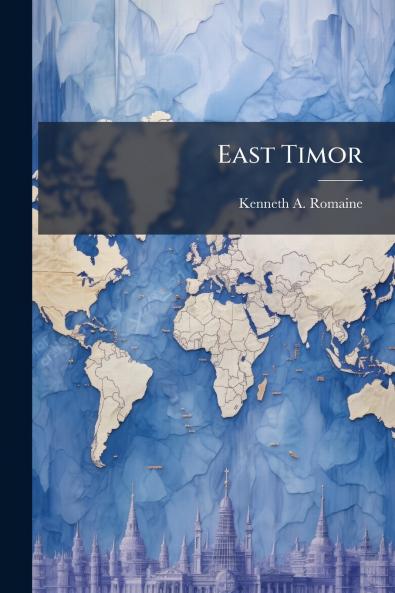
<p>The end of the Cold War shifted the United States' strategic focus from a clearly identified monolithic national security threat to a less well-defined focus on international engagement. The resultant strategy was an attempt to maintain security through the promotion of democratic ideals and economic prosperity abroad. This shift has resulted in the U.S. armed forces becoming involved in numerous operations which previously had fallen outside - or at least on the periphery - of their primary mission. The success of operations in East Timor with Australia as the lead nation and minimal U.S. support created a potential option for U.S. civilian and military leaders that would reduce U.S. efforts in peace operations. This monograph addresses the likelihood that other nations could take the lead during contingency operations while receiving only limited support from the United States. The paucity of regional hegemons capable of fulfilling this role especially in Africa raises the question of whether this is a viable strategy for the U.S. in the short term. The monograph concludes that the lack of sufficient capabilities in current regional forces makes the East Timor model an impractical standard to set for future U.S. support in Sub-Saharan Africa. The United States will not be able to rely on potential lead nations such as Nigeria or South Africa for both political and military reasons in the near term. As such the United States should not significantly alter its strategy of preparing its forces for the full spectrum of military operations. U.S. forces will be required to fulfill the role of lead nation in operations other than war while still maintaining critical capabilities to conduct full-scale conventional operations in the unlikely event of a major theater war. Continued efforts must be made to improve African nations' ability to conduct large-scale multinational operations for long-term stability.</p><p>This work has been selected by scholars as being culturally important and is part of the knowledge base of civilization as we know it. This work was reproduced from the original artifact and remains as true to the original work as possible. Therefore you will see the original copyright references library stamps (as most of these works have been housed in our most important libraries around the world) and other notations in the work.</p><p>This work is in the public domain in the United States of America and possibly other nations. Within the United States you may freely copy and distribute this work as no entity (individual or corporate) has a copyright on the body of the work.</p><p>As a reproduction of a historical artifact this work may contain missing or blurred pages poor pictures errant marks etc. Scholars believe and we concur that this work is important enough to be preserved reproduced and made generally available to the public. We appreciate your support of the preservation process and thank you for being an important part of keeping this knowledge alive and relevant.</p>

Piracy-free

Assured Quality

Secure Transactions

Fast Delivery

Sustainably Printed
Details
ISBN 13
9781288229512
Publication Date
-29-10-2012
Pages
-54
Weight
-92 grams
Dimensions
-156x234x2.95 mm
