


English



Paperback
₹1583
₹1673
5.38% OFF
(All inclusive*)
Delivery Options
Please enter pincode to check delivery time.
*COD & Shipping Charges may apply on certain items.
Review final details at checkout.
Looking to place a bulk order? SUBMIT DETAILS
Delivery Options
Please enter pincode to check delivery time.
*COD & Shipping Charges may apply on certain items.
Review final details at checkout.
About The Book
Description
Author
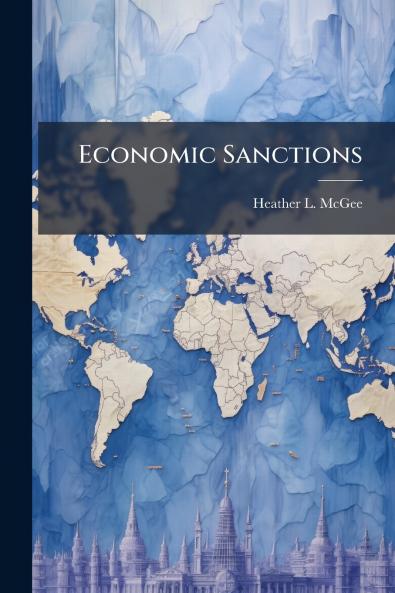
<p>Economic sanctions are a form of non-violent warfare that has been used more frequently over the past fifty years to change the behavior or policies of a target state. This research paper will determine if economic sanctions can successfully coerce a target state to comply with the sender's military or political position without violating the principles of just war doctrine. Research and analysis of previous case studies along with the ethical and moral implications of those sanctions with or without jus in bello applications will help determine if economic sanctions can succeed without just war doctrine violations. Most existing literature states that when there is significant cooperation amongst senders and the target state is economically and politically weak sanctions are likely to be successful. However little information exists on the success factor when sanctions are applied under the principles of just war doctrine and more specifically jus in bello (just conduct in war). Since sanctions are imposed under varying degrees of cooperation the cases are separated into 3 separate categories for analysis: coincidence (significant cooperation) coercion (moderate cooperation) and co-adjustment (little to no cooperation). While it was expected to find sanctions more successful under full cooperation the research showed that in almost every case economic sanctions did not meet the defined success criteria and jus in bello was oftentimes violated. Given that the use of sanctions is increasing as the preferred tool of modern warfare more needs to be done to ensure sanctions are applied without harming vulnerable members of the target society.</p><p>This work has been selected by scholars as being culturally important and is part of the knowledge base of civilization as we know it. This work was reproduced from the original artifact and remains as true to the original work as possible. Therefore you will see the original copyright references library stamps (as most of these works have been housed in our most important libraries around the world) and other notations in the work.</p><p>This work is in the public domain in the United States of America and possibly other nations. Within the United States you may freely copy and distribute this work as no entity (individual or corporate) has a copyright on the body of the work.</p><p>As a reproduction of a historical artifact this work may contain missing or blurred pages poor pictures errant marks etc. Scholars believe and we concur that this work is important enough to be preserved reproduced and made generally available to the public. We appreciate your support of the preservation process and thank you for being an important part of keeping this knowledge alive and relevant.</p><br>

Piracy-free

Assured Quality

Secure Transactions
Details
ISBN 13
9781025086323
Publication Date
-22-05-2025
Pages
-40
Weight
-73 grams
Dimensions
-156x234x2.1 mm
