

English


Paperback
₹2799
₹2808
0.32% OFF
(All inclusive*)
Delivery Options
Please enter pincode to check delivery time.
*COD & Shipping Charges may apply on certain items.
Review final details at checkout.
Looking to place a bulk order? SUBMIT DETAILS
Delivery Options
Please enter pincode to check delivery time.
*COD & Shipping Charges may apply on certain items.
Review final details at checkout.
About The Book
Description
Author
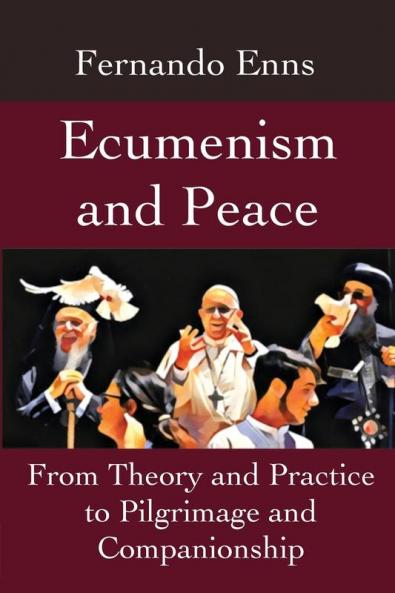
<p>The globally reconciling-conciliar Church is on the path - the <em>via transformativa </em>- toward unity through action and reflection guided by the Gospel visions of justice and peace. Fernando Enns analyzes what has been learned in recent decades on the 'testing grounds' of ecumenical theory and practice then demonstrates how the new era of the WCC's action-oriented programs produce ongoing diverse ecclesial efforts toward social and spiritual transformation.</p><p>&nbsp;</p><p>Enns examines in depth the WCC's 'Decade to Overcome Violence' leading to the theological basis of the 'Pilgrimage of Justice and Peace' a further outgrowth of what the <em>oikoumene</em> has learned through peace-centered ecumenism. The development of a full coherent inspiring globally-responsible and effective commitment to seek 'just peace' remains an urgent task as the Church considers Christ's <em>Companionship </em>as our model for this journey.</p><p>&nbsp;</p><p>Part practical guide to ecumenical methodology and part theological interpretation and prognosis Enns shows how both <em>ecumenism </em>and<em> peace</em> are in essence the mission and purpose of the Church today.</p><p><strong><em>&nbsp;</em></strong></p><p><strong><em>About the Author</em></strong>. Dr. Fernando Enns is Professor of Theology and Ethics at the Vrije Universiteit in Amsterdam and Director of the Amsterdam Center for Religion and Peace &amp; Justice Studies. In addition he is Professor of (Peace-) Theology and founder of the Center for Peace Church Theology at the University of Hamburg. Since 1998 a member of the Central Committee of the World Council of Churches (WCC) Enns has been moderator of several international study groups on behalf of the WCC. He is also vice chair of the Association of Mennonite Churches in Germany (AMG).</p>

Piracy-free

Assured Quality

Secure Transactions

Fast Delivery

Sustainably Printed
Details
ISBN 13
9781990827044
Publication Date
-27-08-2022
Pages
-336
Weight
-17 grams
Dimensions
-152x229x21.25 mm
