


This Book is Out of Stock!
English


Hardback
₹9723
₹12222
20.45% OFF
(All inclusive*)
Delivery Options
*COD & Shipping Charges may apply on certain items.
Review final details at checkout.
Looking to place a bulk order? SUBMIT DETAILS

Piracy-free

Assured Quality

Secure Transactions
About The Book
Description
Author
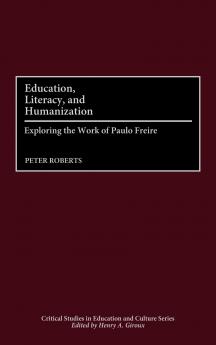
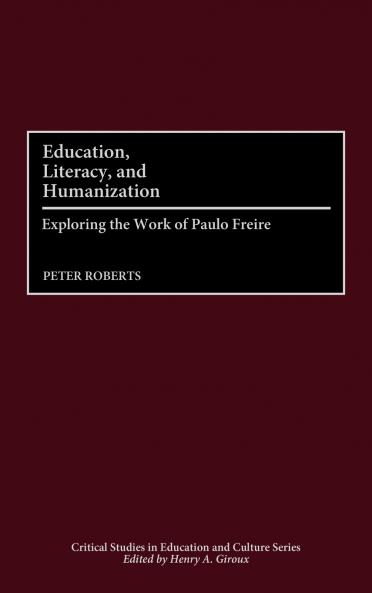
The author adopts a holistic approach in exploring the ontological epistemological ethical and pedagogical dimensions of Paulo Freire''s thought. The book discusses Freire''s approach to adult literacy education and investigates the political dialogical and critical aspects to the multidimensional word in Freirean theory.The author outlines and assesses a number of key critiques of Freire''s modernism concentrating in particular on questions pertaining to the problem of pedagogical intervention. He responds at some length to C.A. Bowers one of Freire''s most important and persistent critics and finds fault with behaviorist stage-based accounts of consciousness raising. The Freirean concept of conscientization is reinterpreted in light of the postmodern notion of multiple subjectivities. From this book Freire emerges as a complex educational figure: a thinker and teacher deeply committed to the universalist ideal of humanization yet also wary of some of the exaggerated certainties of modernism. His work for all its flaws and contradictions remains highly influential and stands opposed to technicist and neoliberal tendencies in recent educational reform initiatives.
Piracy-free
Assured Quality
Secure Transactions
*COD & Shipping Charges may apply on certain items.
Review final details at checkout.
₹9723
₹12222
20% OFF
Hardback
Out Of Stock
All inclusive*
Details
ISBN 13
9780897895712
Publication Date
-30-05-2000
Pages
-190
Weight
-353 grams
Dimensions
-152x229x14.29 mm
