





This Book is Out of Stock!
English




Hardback
₹5585
₹6375
12.39% OFF
(All inclusive*)
Delivery Options
*COD & Shipping Charges may apply on certain items.
Review final details at checkout.
Looking to place a bulk order? SUBMIT DETAILS

Piracy-free

Assured Quality

Secure Transactions
About The Book
Description
Author
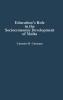
The island of Malta a nonaligned power received full independence from Great Britain in 1964. Malta''s consequent classification as a developing nation compelled its government to initiate many changes in its political social and economic ideologies. Central to its efforts for redevelopment was a stronger emphasis on expansion of its international educational environment which included vocational technical and academic training. The island has continued to prepare and maintain itself to accommodate the emerging multinational business community recognizing the importance and impact it would have on the country''s future post-secondary education emphasis was placed on career-oriented (work-study) programs and included the mastery of four foreign languages. In its search for economic social and political stability Malta''s destiny was strongly influenced by situational factors--societal cultural religious foreign and political. Viewing Malta as a case study this volume sheds light on the functioning of an educational system in a developing nation demonstrates education''s role in improving a nation''s socioeconomic system and supports economic theories that maintain that investment in education is a natural tool for economic development. It also provides information on approaches and techniques other countries use to resolve their educational problems and adds to the knowledge of international and business education.
Piracy-free
Assured Quality
Secure Transactions
*COD & Shipping Charges may apply on certain items.
Review final details at checkout.
₹5585
₹6375
12% OFF
Hardback
Out Of Stock
All inclusive*
Details
ISBN 13
9780275940652
Publication Date
-26-10-1992
Pages
-144
Weight
-307 grams
Dimensions
-156x234x9.53 mm
