


English



Paperback
₹1687
₹1848
8.71% OFF
(All inclusive*)
Delivery Options
Please enter pincode to check delivery time.
*COD & Shipping Charges may apply on certain items.
Review final details at checkout.
Looking to place a bulk order? SUBMIT DETAILS

Piracy-free

Assured Quality

Secure Transactions
About The Book
Description
Author
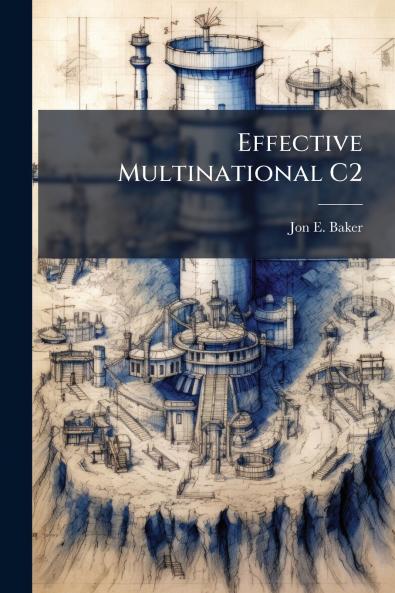
<p>United States armed forces have historically fought alongside allied forces and are currently engaged in several multinational operations around the world. Most if not all future U.S. military peacekeeping combat or stability operations will continue to consist of multinational structures commonly known as coalitions or alliances. The inherent complexity of creating an effective multinational Command and Control (C2) structure comprised of different countries and operating under unfamiliar C2 structures creates tension in achieving unity of effort unity of command and unity of action towards subsequent mission accomplishment. Historically this tension has revolved around the issue of multinational C2. Differences in national interests culture and incompatibilities in operating procedures technologies training and operational capabilities add to the tension posed by multinational operations. Fortunately U.S. Joint U.S. service and NATO doctrine as well as history provide useful guidelines to ameliorate the tension posed by multinational differences and incompatibilities towards effective multinational C2. A synthesis of the doctrinal foundations of C2 and four historic multinational operations namely World War I World War II the Persian Gulf War and ISAF led to the identification of five essential variables that must be addressed and implemented in order to establish effective multinational C2. These variables are the need for establishing unity of purpose through international legitimacy; the need for an integrated multinational command structure in achieving unity of command; the need for an educated human equation; the need for multinational training; and the need for interoperable Communications and Information Systems (CIS) in exercising effective multinational C2. If these five variables are not adequately addressed then effective multinational C2 will be difficult to achieve. The five essential variables are summarized as follows: (1) T</p><p>This work has been selected by scholars as being culturally important and is part of the knowledge base of civilization as we know it. This work was reproduced from the original artifact and remains as true to the original work as possible. Therefore you will see the original copyright references library stamps (as most of these works have been housed in our most important libraries around the world) and other notations in the work.</p><p>This work is in the public domain in the United States of America and possibly other nations. Within the United States you may freely copy and distribute this work as no entity (individual or corporate) has a copyright on the body of the work.</p><p>As a reproduction of a historical artifact this work may contain missing or blurred pages poor pictures errant marks etc. Scholars believe and we concur that this work is important enough to be preserved reproduced and made generally available to the public. We appreciate your support of the preservation process and thank you for being an important part of keeping this knowledge alive and relevant.</p>
Piracy-free
Assured Quality
Secure Transactions
Delivery Options
Please enter pincode to check delivery time.
*COD & Shipping Charges may apply on certain items.
Review final details at checkout.
Details
ISBN 13
9781288230143
Publication Date
-29-10-2012
Pages
-56
Weight
-95 grams
Dimensions
-156x234x3.05 mm
