




This Book is Out of Stock!
English





Hardback
₹24173
(All inclusive*)
Delivery Options
*COD & Shipping Charges may apply on certain items.
Review final details at checkout.
Looking to place a bulk order? SUBMIT DETAILS
*COD & Shipping Charges may apply on certain items.
Review final details at checkout.
₹24173
Out Of Stock
All inclusive*
About The Book
Description
Author
Shoutouts
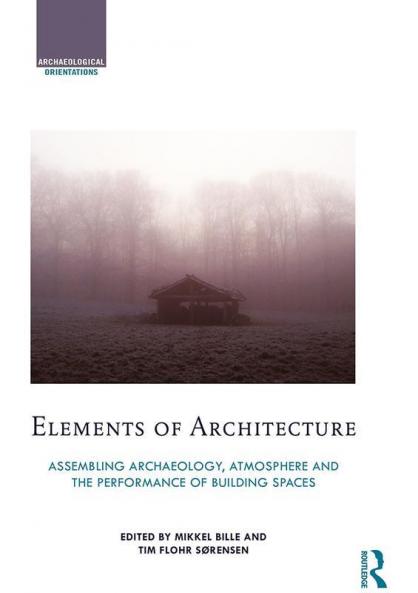
<p><em>Elements of Architecture</em> explores new ways of engaging architecture in archaeology. It conceives of architecture both as the physical evidence of past societies and as existing beyond the physical environment, considering how people in the past have not just dwelled in buildings but have existed within them. The book engages with the meeting point between these two perspectives. For although archaeologists must deal with the presence and absence of physicality as a discipline, which studies humans through things, to understand humans they must also address the performances, as well as temporal and affective impacts, of these material remains. The contributions in this volume investigate the way time, performance and movement, both physically and emotionally, are central aspects of understanding architectural assemblages. It is a book about the constellations of people, places and things that emerge and dissolve as affective, mobile, performative and temporal engagements. </p><p>This volume juxtaposes archaeological research with perspectives from anthropology, architecture, cultural geography and philosophy in order to explore the kaleidoscopic intersections of elements coming together in architecture. Documenting the ephemeral, relational, and emotional meeting points with a category of material objects that have defined much research into what it means to be human, <em>Elements of Architecture</em> elucidates and expands upon a crucial body of evidence which allows us to explore the lives and interactions of past societies.</p> <p>Into the Fog of Architecture <br>Mikkel Bille &amp; Tim Flohr Sørensen</p><p>On Behalf of Form: The view from archaeology and architecture <br>Graham Harman</p><p>Part I: Form and Temporality<br>On Shaping Buildings <br>Mikkel Bille &amp; Tim Flohr Sørensen</p><p>Immanent Architecture <br>Lesley K. McFadyen</p><p>Big Affects: Size, Sex and Stalinist ‘Architectural Power’ in Post-Socialist Warsaw <br>Michal Murawski</p><p>Architecture in Ruins: Palladio, Piranesi and Kahn <br>Jonathan Hill</p><p>Building Lives <br>Gavin Lucas </p><p>Archaeologies of an Informal City: Temporal dimensions of contemporary Andean urbanism <br>Alison Kohn &amp; Shannon Lee Dawdy</p><p>Brussels’ Conflicting Constructs <br>Mark Minkjan &amp; Ingel Vaikla</p><p>Part II: Atmospheres<br>A Sense of Place <br>Mikkel Bille &amp; Tim Flohr Sørensen</p><p>Lighting up the Atmosphere <br>Tim Ingold</p><p>Traffic Architecture – Hidden affections<br>Jürgen Hasse</p><p>Affective Architecture in Ardnamurchan: Assemblages at three scales <br>Oliver J. T. Harris</p><p>A Sense of Architecture in the Past: Exploring the sensory experience of architecture in archaeology <br>Serena Love<br> <br>Part III: Performance and process<br>Architecture in Motion<br>Mikkel Bille &amp; Tim Flohr Sørensen</p><p>Politics of Architectural Imaging: Four ways of assembling a city <br>Albena Yaneva</p><p>Homeless, Home-Making, and Archaeology: ‘To be at home wherever I find myself’ <br>Larry J. Zimmerman</p><p>Into Architecture: House-building and acentered personhood in Maputo, Mozambique <br>Morten Nielsen</p><p>Sedimentation and Sentiment: Destabilizing architecture at the post-industrial Mexican periphery <br>Jason Ramsey</p><p>Performance Architecture: Absence, place and action <br>Nick Kaye</p><p>Reframing the Ziggurat: Looking at (and from) ancient Mesopotamian temple towers <br>Augusta McMahon<br> <br>Part IV: Disintegration and unfinishedness<br>Architecture Becoming New Spaces <br>Mikkel Bille &amp; Tim Flohr Sørensen</p><p>Incipient Ruination: Materiality, destructive agencies and repair <br>Tim Edensor</p><p>For Love of Ruins <br>Þóra Pétursdóttir</p><p>Unfinishing Buildings <br>Michael A. Ulfstjerne</p><p>The Disconnected Experience of Some Designed Places <br>Jørgen Ole Bærenholdt</p><p>Failure? An archaeology of the architecture of nuclear waste containment<br>Rosemary Joyce</p><p>Index</p>

Piracy-free

Assured Quality

Secure Transactions

Fast Delivery

Sustainably Printed
Details
ISBN 13
9781138775411
Publication Date
-12-02-2021
Pages
-462
Weight
-872 grams
Dimensions
-174x246x25.74 mm
