

English


₹3014
₹3211
6.14% OFF
(All inclusive*)
Paperback
Delivery Options
Please enter pincode to check delivery time.
*COD & Shipping Charges may apply on certain items.
Review final details at checkout.
Looking to place a bulk order? SUBMIT DETAILS
Delivery Options
Please enter pincode to check delivery time.
*COD & Shipping Charges may apply on certain items.
Review final details at checkout.
About The Book
Description
Author(s)
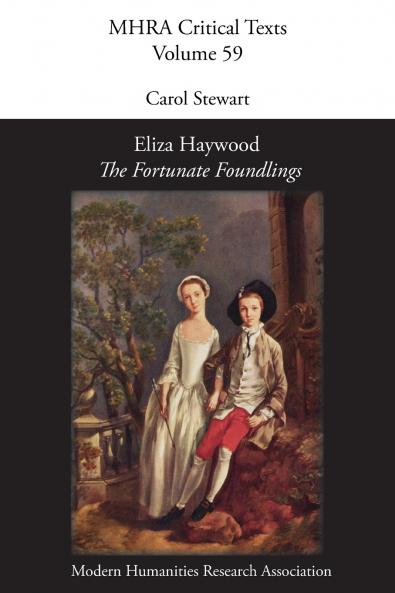
<p><em>The Fortunate Foundlings&nbsp;</em>was one of Eliza Haywood's more successful novels though it remains one of her lesser known works. Ittells the story of a brother and sister left as babies in the care of a gentleman. Like many another eighteenth-century foundling the siblings leave their guardian behind and make their own way in the world: Horatio as a soldier and Louisa as a lady's companion finding love and adventure in the battlefields and courts of Europe. Haywood uses the Continental setting to explore different customs - especially those that might benefit women - and different political choices.</p><p>Also published here for the first time is her anonymous pamphlet of 1750&nbsp;<em>A Letter from H--- G---g Esq.</em> ostensibly a letter from Charles Edward Stuart's&nbsp;<em>aide-de-camp</em> travelling with him after the prince's expulsion from France. Seemingly a straightforward expression of Jacobite sympathies it also encodes support for the Patriot cause of the 1740s and '50s.</p><p>Both works were translated and adapted having an extended afterlife in the writings of Crébillon&nbsp;<em>fils</em> Edward Kimber and Robert Louis Stevenson. They add to our expanding sense of the author's range influence and political agenda.</p><p>Edward Kimber's adaptation Crébillon's version <em>The Happy Orphans</em> is also available in the MHRA Critical Texts series.</p>

Piracy-free

Assured Quality

Secure Transactions

Fast Delivery

Sustainably Printed
Details
ISBN 13
9781781882672
Publication Date
-31-05-2018
Pages
-278
Weight
-399 grams
Dimensions
-156x234x14.83 mm
