


English



Hardback
₹11524
(All inclusive*)
Delivery Options
Please enter pincode to check delivery time.
*COD & Shipping Charges may apply on certain items.
Review final details at checkout.
Looking to place a bulk order? SUBMIT DETAILS
Delivery Options
Please enter pincode to check delivery time.
*COD & Shipping Charges may apply on certain items.
Review final details at checkout.
About The Book
Description
Author
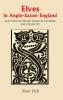
Anglo-Saxon elves [Old English 'ælfe'] are one of the best attested non-Christian beliefs in early medieval Europe but current interpretations of the evidence derive directly from outdated nineteenth- and early twentieth-century scholarship. Integrating linguistic and textual approaches into an anthropologically-inspired framework this book reassesses the full range of evidence. It traces continuities and changes in medieval non-Christian beliefs with a new degree of reliability from pre-conversion times to the eleventh century and beyond and uses comparative material from medieval Ireland and Scandinavia to argue for a dynamic relationship between beliefs and society. In particular it interprets the cultural significance of elves as a cause of illness in medical texts and provides new insights into the much-discussed Scandinavian magic of 'seidr'. Elf-beliefs moreover were connected with Anglo-Saxon constructions of sex and gender; their changing nature provides a rare insight into a fascinating area of early medieval European culture. Shortlisted for the Katharine Briggs Folklore Award 2007ALARIC HALL is a fellow of the Helsinki Collegium for Advanced Studies.

Piracy-free

Assured Quality

Secure Transactions

Fast Delivery

Sustainably Printed
Details
ISBN 13
9781843832942
Publication Date
-15-03-2007
Pages
-240
Weight
-439 grams
Dimensions
-156x234x14.29 mm
