


English


Hardback
₹16819
₹21566
22.01% OFF
(All inclusive*)
Delivery Options
Please enter pincode to check delivery time.
*COD & Shipping Charges may apply on certain items.
Review final details at checkout.
Looking to place a bulk order? SUBMIT DETAILS

Piracy-free

Assured Quality

Secure Transactions
About The Book
Description
Author
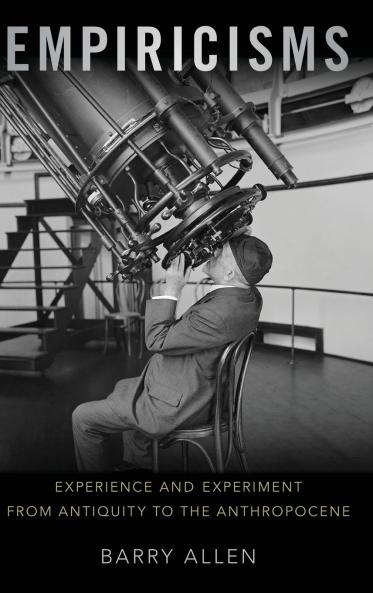
In this sweeping volume of comparative philosophy and intellectual history Barry Allen reassesses the values of experience and experiment in European and world traditions. His work traces the history of empirical philosophy from its birth in Greek medicine to its emergence as a philosophy of modern science. He surveys medical empiricism Aristotlean and Epicurean empiricism the empiricism of Gassendi and Locke logical empiricism radical empiricism transcendental empiricism and varieties of anti-empiricism from Parmenides to Wilfrid Sellars. <p/>Throughout this extensive intellectual history Allen builds an argument in three parts. A richly detailed account of history's empiricisms in Part One establishes a context in Part Two for reconsidering the work of the radical empiricists--William James Henri Bergson John Dewey and Gilles Deleuze each treated in a dedicated chapter. What is radical about them is their effort to return empiricism from epistemology to the ontology and natural philosophy where it began. <p/>In Part Three Allen sets empirical philosophy in conversation with Chinese tradition considering technological scientific medical and alchemical sources as well as selected Confucian Daoist and Mohist classics. The work shows how philosophical reflection on experience and a profound experimental practice coexist in traditional China with no interaction or even awareness of each other slipping over each other instead of intertwining as they did in European history a difference Allen attributes to a different understanding of the value of knowledge. <p/>Allen's book recovers empiricism's neglected multi-textured contexts and elucidates the enduring value of experience to arrive at an idea of what is living and dead in philosophical empiricism.<br>
Piracy-free
Assured Quality
Secure Transactions
Delivery Options
Please enter pincode to check delivery time.
*COD & Shipping Charges may apply on certain items.
Review final details at checkout.
Details
ISBN 13
9780197508930
Publication Date
-08-12-2020
Pages
-540
Weight
-850 grams
Dimensions
-156x234x30.16 mm
