


English



Paperback
₹1529
₹1671
8.5% OFF
(All inclusive*)
Delivery Options
Please enter pincode to check delivery time.
*COD & Shipping Charges may apply on certain items.
Review final details at checkout.
Looking to place a bulk order? SUBMIT DETAILS

Piracy-free

Assured Quality

Secure Transactions
About The Book
Description
Author
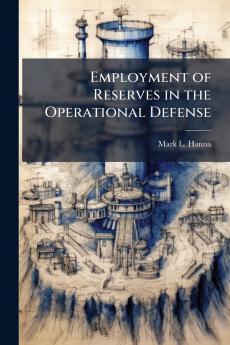
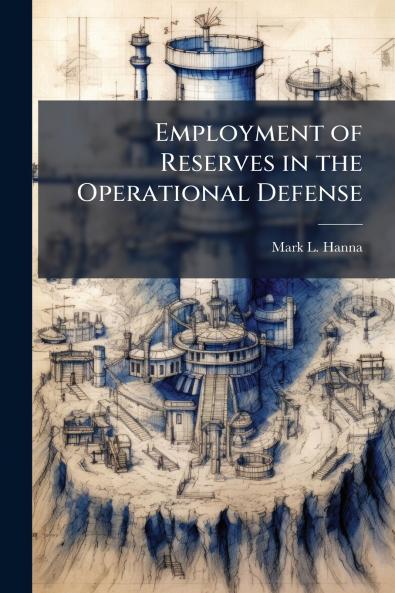
<p>This study is an analysis of how best to employ operational reserves to counter an enemy operational offensive and developing penetration. The study addresses the question of whether reserves should be employed as they become available to limit and then reduce the enemy penetration; or whether they should be marshaled and built up allowing the penetration to continue and then committed in a decisive counterstroke. Classical theory concerning defensive operational art and employment of reserves is analyzed including works of Clausewitz Jomini and Sun Tzu. Historical analysis compares and contrasts employment of operational reserves by the Germans in the 1943 Kharkov campaign and the Allies in the 1944 Ardennes campaign. Finally AirLand Battle doctrine is analyzed in light of conclusions drawn from the theoretical and historical analysis. The study concludes that the optimum employment of operational reserves involves allowing the penetration to develop while marshaling and concentrating one's reserves for a decisive counterstroke against the flanks and rear of successive portions of the enemy forces. Theoretical and historical analysis supports this conclusion. Historical analysis also shows that many factors may be present to mitigate this theoretically correct employment. These include terrain relative tactical ability strategic goals risk command structure and command style of the operational commander. The study further concludes that AirLand Battle doctrine for the operational defense is well in line with the theoretical and historical conclusions.</p><p>This work has been selected by scholars as being culturally important and is part of the knowledge base of civilization as we know it. This work was reproduced from the original artifact and remains as true to the original work as possible. Therefore you will see the original copyright references library stamps (as most of these works have been housed in our most important libraries around the world) and other notations in the work.</p><p>This work is in the public domain in the United States of America and possibly other nations. Within the United States you may freely copy and distribute this work as no entity (individual or corporate) has a copyright on the body of the work.</p><p>As a reproduction of a historical artifact this work may contain missing or blurred pages poor pictures errant marks etc. Scholars believe and we concur that this work is important enough to be preserved reproduced and made generally available to the public. We appreciate your support of the preservation process and thank you for being an important part of keeping this knowledge alive and relevant.</p>
Piracy-free
Assured Quality
Secure Transactions
Delivery Options
Please enter pincode to check delivery time.
*COD & Shipping Charges may apply on certain items.
Review final details at checkout.
Details
ISBN 13
9781288249459
Publication Date
-09-11-2012
Pages
-38
Weight
-70 grams
Dimensions
-156x234x2 mm
