

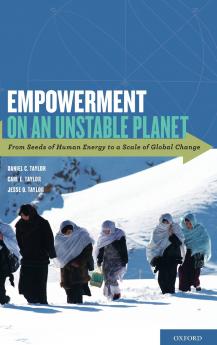
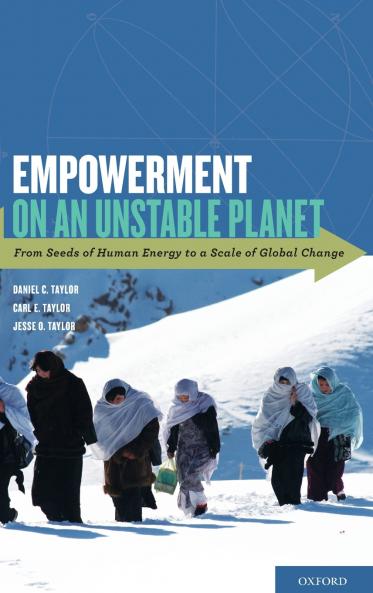
by
Taylor
English


Hardback
₹8308
₹10704
22.38% OFF
(All inclusive*)
Delivery Options
Please enter pincode to check delivery time.
*COD & Shipping Charges may apply on certain items.
Review final details at checkout.
Looking to place a bulk order? SUBMIT DETAILS
Delivery Options
Please enter pincode to check delivery time.
*COD & Shipping Charges may apply on certain items.
Review final details at checkout.
About The Book
Description
Author
Since World War II development projects have invested more than two trillion dollars towards health services poverty alleviation education food security and environmental initiatives around the world. Despite these efforts 20% of the world still lives on less than $1.50 a day and the environment within which all live declines dramatically. There are clear limits to what further investments at this rate can achieve. This book advances the thesis that a more effective and universal foundation for social change and environmental restoration is not money but human energy.Using this approach Tibet recovered from being nearly deforested to having over 40% of its land area protected under conservation management. Using principles outlined in this book mothers in northeast India implemented a package of life-changing actions that halved child mortality. They parallel the way New York City has created a citywide conservation program over three-and-a-half centuries. Each of these examples is particular to its time and place yet a shared set of principles is at work in all of them.Improving the quality of life for a community starts by strengthening successes already operating. It involves local knowledge and a relatively simple set of principles tasks and criteria designed to empower communities. This highly readable account demonstrates how a comprehensive process for social change harnesses the energy of a community and scales it up with a rising number of participants becoming invested in increasingly high-quality work. Richly illustrated with photographs and stories of innovative people and programs in communities ranging from Nepal to Afghanistan to the South Bronx it provides practical proven guidelines for creating profound and sustained social change that begins in individual communities and grows to scale.

Piracy-free

Assured Quality

Secure Transactions

Fast Delivery

Sustainably Printed
Details
ISBN 13
9780199842964
Publication Date
-21-04-2009
Pages
-296
Weight
-516 grams
Dimensions
-156x234x17.46 mm
