

English


₹4195
(All inclusive*)
Paperback
Delivery Options
Please enter pincode to check delivery time.
*COD & Shipping Charges may apply on certain items.
Review final details at checkout.
Looking to place a bulk order? SUBMIT DETAILS
Delivery Options
Please enter pincode to check delivery time.
*COD & Shipping Charges may apply on certain items.
Review final details at checkout.
About The Book
Description
Author
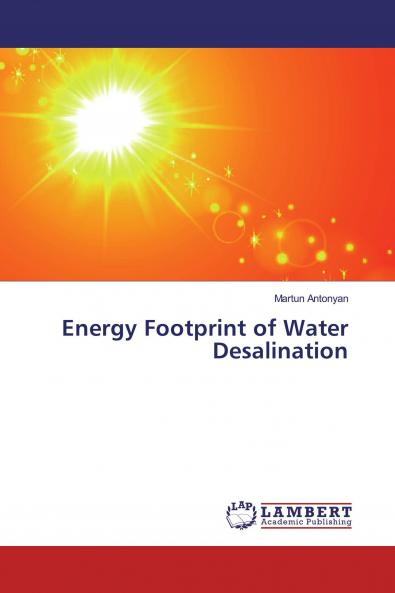
Demand for the freshwater is growing due to the growth of world population that entails growing demand of freshwater for agricultural and industrial purposes. However the fresh water availability on Earth is limited and many countries face severe water shortages. Water desalination could be a possible solution for this problem. Among the variety of existing water desalination technologies three are particularly promising these are: reverse osmosis (RO) multi stage flash (MSF) multi effect distillation (MED). Energy consumption of desalination processes are determined by factors like capacity of desalination plant (small medium large) the energy source (electricity vs thermal) type of feed water (brackish (BW) vs seawater (SW)) desalination method (thermal vs membrane) use of renewable energy sources (solar wind geothermal) and necessity of feed pretreatment (mechanical and/or chemical). In this paper I compare the total energy consumption of different methods considering each influential factor and categorizing the existing desalination techniques.

Piracy-free

Assured Quality

Secure Transactions

Fast Delivery

Sustainably Printed
Details
ISBN 13
9786200247353
Publication Date
-18-07-2019
Pages
-52
Weight
-81 grams
Dimensions
-150x220x3.27 mm
