


English
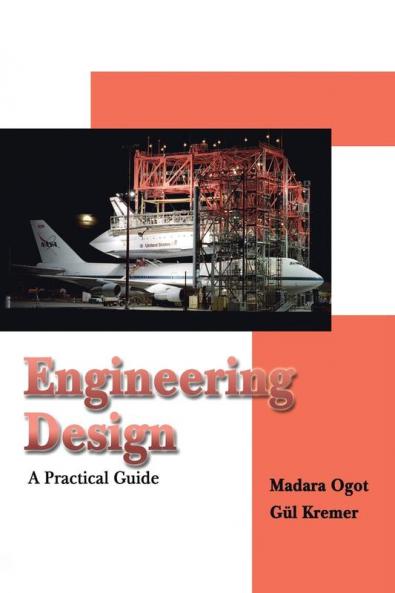



Paperback
₹4643
(All inclusive*)
Delivery Options
Please enter pincode to check delivery time.
*COD & Shipping Charges may apply on certain items.
Review final details at checkout.
Looking to place a bulk order? SUBMIT DETAILS

Piracy-free

Assured Quality

Secure Transactions
About The Book
Description
Author
<P>Successful engineering design requires a strong understanding of fundamentalconcepts in the basic sciences and engineering combined with mathematics.This text provides an introduction to the design tools used in engineeringdesign. It focuses on the first two steps of the design process:determination of need/problem clarification and conceptualization.<P>In addition an overview of materials and manufacturing methods ispresented. The use of Excel has been incorporated throughout the text forperforming routine calculations leaving more time for the creative aspectsof the design process. Finally the text contains an extensive discussion ofsystematic concept generation using the theory of inventive problem solvingTRIZ. </P> <P>Below is a listing of the book's table of contents:</P><P>1. Engineering Design<BR> 1.1 Design<BR> 1.2 Engineering Design<BR> 1.3 Process Design<BR> 1.4 Overview of the Engineering Design Process<BR> 1.5 Design Reviews<BR></P><P>PART I ENGINEERING DESIGN AIDS</P><P>2. Management of the Design Process<BR> 2.1 Introduction to Project Management<BR> 2.2 Planning and Scheduling (includes discussion of work breakdown structures design structure matrix activity networks and Gantt charts). Provides an automated MS Excel-based project management workbook that incorporates all these tools).<BR> 2.2 Directing</P><P>3. Collaborative Design<BR> 3.1 Introduction<BR> 3.2 Conceptual Understanding of Teams and Team Development<BR> 3.3 Challenges: Conflict Management Performance and Motivation<BR> 3.4 Communication<BR> 3.5 Potential Factors Impacting Team Performance<BR></P><P>4. Engineering Communication: Reports and Oral Presentations<BR> 4.1 Introduction<BR> 4.2 The Formal Engineering Report<BR> 4.3 Plagiarism<BR> 4.4 Report Formats<BR> 4.5 Oral Presentations<BR> 4.6 Poster Presentations<BR></P><P>5. Engineering Communication: Illustration and Solid Modeling<BR> 5.1 Introduction<BR> 5.2 Introduction to Digital Media<BR> 5.3 Technical Sketching and Solid Modeling<BR> 5.4 Working Drawings<BR> 5.5 Computer Generated Sketches for Documentation<BR></P><P>6. Decision Making<BR> 6.1 Introduction<BR> 6.2 Rank Order: Pairwise Comparison Charts<BR> 6.3 Relative Order: Analytic Hierarchy Process (AHP)<BR> 6.4 Relative Order: Decision Matrices<BR></P><P>PART II THE ENGINEERING DESIGN PROCESS</P><P>7. Problem Definition and Determination of Need<BR> 7.1 Introduction<BR> 7.2 Problem Definition<BR> 7.3 Determination of Customer/Client Needs<BR> 7.4 Revised Problem Statement<BR></P><P>8. Conceptualization I: External Search<BR> 8.1 Introduction<BR> 8.2 Patents and Patent Searches<BR> 8.3 Benchmarking<BR> 8.4 Product Dissection<BR> 8.5 Biomimicry<BR></P><P>9. Conceptualization II: Internal Search and Concept Selection<BR> 9.1 Introduction<BR> 9.2 Internal Search (Includes discussion on concept generation methods such as brain storming and its variations Delphi method synetics checklists scamper and morphological charts).<BR> 9.3 Concept Selection (Use of Pugh charts and decision matrices)<BR></P><P>10. Systematic Innovation with TRIZ<BR> 10.1 Introduction<BR> 10.2 Simplified Steps for Application of TRIZ tools<BR> 10.3 Analyzing the System and its Resources<BR> 10.4 The Ideal Final Result<BR> 10.5 The 40 Design Principles<BR> 10.6 Technical Contradictions and the Contradiction Matrix<BR> 10.7 Physical Contradictions</P><P>PART III Overview of Materials and Manufacturing</P><P>11. Materials and Material Selection<BR> 11.1 Introduction<BR> 11.2 Materials and Material Selection<BR> 11.3 Mechanical Properties of Materials: Stress-Strain<BR> 11.4 Typical Mechanical Properties for Material Selection<BR> 11.5 Typica
Piracy-free
Assured Quality
Secure Transactions
Delivery Options
Please enter pincode to check delivery time.
*COD & Shipping Charges may apply on certain items.
Review final details at checkout.
Details
ISBN 13
9781412038508
Publication Date
-11-01-2007
Pages
-472
Weight
-634 grams
Dimensions
-152x229x24.16 mm
