

English


₹7435
₹10107
26.44% OFF
(All inclusive*)
Paperback
Delivery Options
Please enter pincode to check delivery time.
*COD & Shipping Charges may apply on certain items.
Review final details at checkout.
Looking to place a bulk order? SUBMIT DETAILS
Delivery Options
Please enter pincode to check delivery time.
*COD & Shipping Charges may apply on certain items.
Review final details at checkout.
About The Book
Description
Author
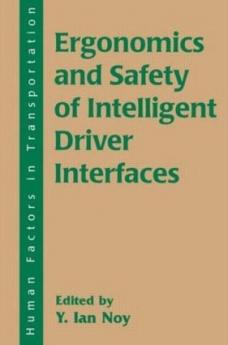
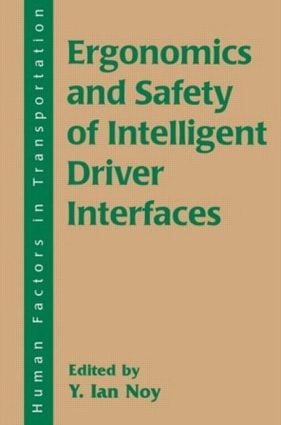
<p>Even to the casual observer of the automotive industry it is clear that driving in the 21st century will be radically different from driving as we know it today. Significant advances in diverse technologies such as digital maps communication links processors image processing chipcards traffic management and vehicle positioning and tracking are enabling extensive development of intelligent transport systems (ITS). Proponents of ITS view these technologies as freeing designers to re-define the role and function of transport in society and to address the urgent problems of congestion pollution and safety. Critics on the other hand worry that ITS may prove too complex too demanding and too distracting for users leading to loss of skill increased incidence of human error and greater risk of accidents.<br><br> The role of human factors is widely acknowledged to be critical to the successful implementation of such technologies. However too little research is directed toward advancing the science of human-ITS interaction and too little is published which is useful to system designers. This book is an attempt to fill this critical gap. It focuses on the intelligent driver interface (IDI) because the ergonomics of IDI design will influence safety and usability perhaps more than the technologies which underlie it.<br><br> The chapters cover a broad range of topics from cognitive considerations in the design of navigation and route guidance to issues associated with collision warning systems to monitoring driver fatigue. The chapters also differ in intent -- some provide design recommendations while others describe research findings or new approaches for IDI research and development. Based in part on papers presented at a symposium on the ergonomics of in-vehicle human systems held under the auspices of the 12th Congress of the International Ergonomics Association the book provides an international perspective on related topics through inclusion of important contributions from Europe North America and Japan.<br><br> Many of the chapters discuss issues associated with navigation and route guidance because such systems are the most salient and arguably the most complex examples of IDI. However the findings and research methodologies are relevant to other systems as well making this book of interest to a wide audience of researchers design engineers transportation authorities and academicians involved with the development or implementation of ITS.</p>

Piracy-free

Assured Quality

Secure Transactions

Fast Delivery

Sustainably Printed
Details
ISBN 13
9780805819564
Publication Date
-01-01-1997
Pages
-451
Weight
-607 grams
Dimensions
-152x229x23.77 mm
