

English


Hardback
₹1728
(All inclusive*)
Delivery Options
Please enter pincode to check delivery time.
*COD & Shipping Charges may apply on certain items.
Review final details at checkout.
Looking to place a bulk order? SUBMIT DETAILS
Delivery Options
Please enter pincode to check delivery time.
*COD & Shipping Charges may apply on certain items.
Review final details at checkout.
About The Book
Description
Author
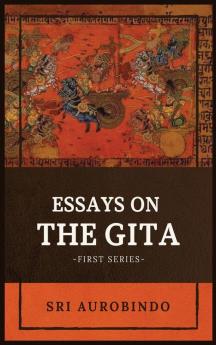
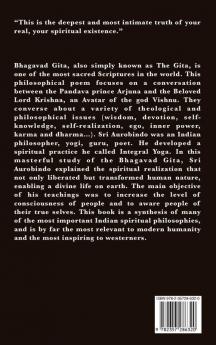
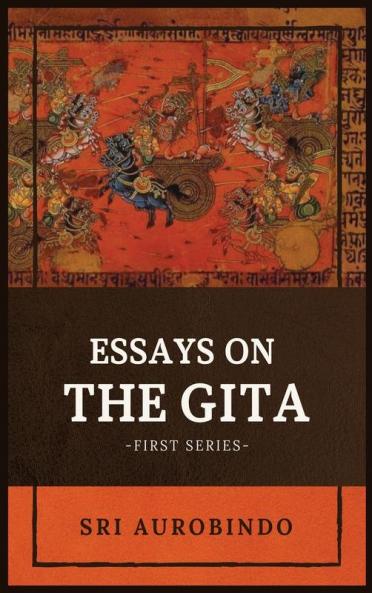
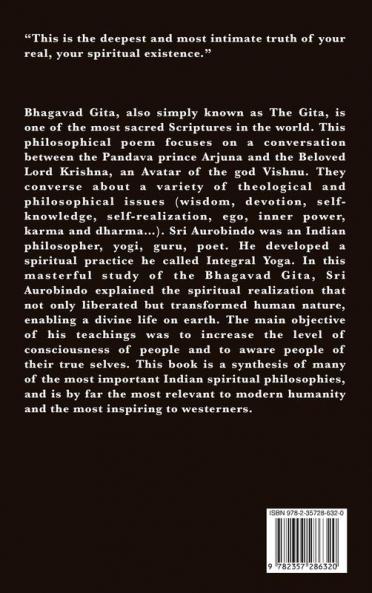
<h2><strong>This is the deepest and most intimate truth of your real your spiritual existence.&nbsp;</strong></h2><p><strong style=color: rgba(0 0 0 1)><em>One of the most penetrating modern interpretations of the Bhagavad Gita.</em></strong></p><p><span style=color: rgba(0 0 0 1)>In this first series of essays Sri Aurobindo offers a masterful philosophical and spiritual reading of the Gita illuminating its central vision of divine action self-knowledge and the transformation of human consciousness. Far from treating the text as a static scripture he reveals it as a living dialogue between the human and the divine-between Arjuna the struggling soul and Krishna the indwelling Lord and guide.</span></p><p><span style=color: rgba(0 0 0 1)>Set on the battlefield of Kurukshetra the Gita becomes in Aurobindo's interpretation a symbol of the inner battle of life. Action is not rejected but divinized; knowledge is not abstract but transformative; renunciation is not withdrawal but spiritual mastery within the world. Through a synthesis of Sankhya Yoga and Vedanta he articulates a dynamic spirituality in which works sacrifice equality and divine birth form part of a progressive awakening toward a higher consciousness.</span></p><p><span style=color: rgba(0 0 0 1)>Written with philosophical rigor and spiritual depth these essays remain foundational for understanding Integral Yoga and its vision of a divine life on earth. They speak to readers of Eastern philosophy comparative religion yoga traditions and modern spiritual seekers looking for a bridge between contemplation and action.</span></p><p><span style=color: rgba(0 0 0 1)>This volume presents the complete First Series in a carefully prepared edition for contemporary readers.</span></p><p></p><p>EXCERPT :<em> The symbolic companionship of Arjuna and Krishna the human and the divine soul is expressed elsewhere in Indian thought in the heavenward journey of Indra and Kutsa seated in one chariot in the figure of the two birds upon one tree in the Upanishad in the twin figures of Nara and Narayana the seers who do tapasyā together for the knowledge. But in all three it is the idea of the divine knowledge in which as the Gita says all action culminates that is in view; here it is instead the action which leads to that knowledge and in which the divine Knower figures himself. Arjuna and Krishna this human and this divine stand together not as seers in the peaceful hermitage of meditation but as fighter and holder of the reins in the clamorous field in the midst of the hurtling shafts in the chariot of battle. The Teacher of the Gita is therefore not only the God in man who unveils himself in the word of knowledge but the God in man who moves our whole world of action by and for whom all our humanity exists and struggles and labours towards whom all human life travels and progresses. He is the secret Master of works and sacrifice and the Friend of the human peoples.&nbsp;</em></p>

Piracy-free

Assured Quality

Secure Transactions

Fast Delivery

Sustainably Printed
Details
ISBN 13
9782357286320
Publication Date
-14-12-2020
Pages
-242
Weight
-421 grams
Dimensions
-152x229x17.46 mm
