




This Book is Out of Stock!
English





Hardback
₹15027
₹18368
18.19% OFF
(All inclusive*)
Delivery Options
*COD & Shipping Charges may apply on certain items.
Review final details at checkout.
Looking to place a bulk order? SUBMIT DETAILS
*COD & Shipping Charges may apply on certain items.
Review final details at checkout.
₹15027
₹18368
18% OFF
Hardback
Out Of Stock
All inclusive*
About The Book
Description
Author
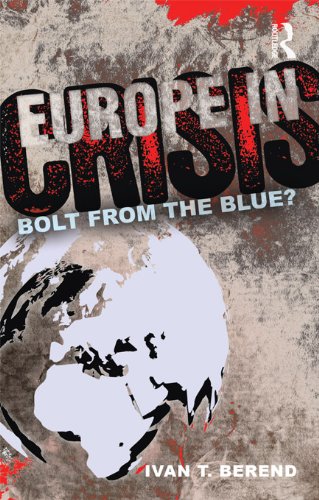
<p>This book analyzes the European Great Recession of 2008-12 its economic and social causes its historical roots and the policies adopted by the European Union to find a way out of it. It contains explicit debates with several economists and analysts on some of the most controversial questions about the causes of the crisis and the policies applied by the European Union.</p><p>It presents the cases of Iceland Greece and Ireland the countries that first declined into crisis in Europe each of them in a different way. Iceland is a case study for reckless banking practices Greece of reckless public spending and Ireland of reckless household indebtedness. At least seven other countries mostly from the peripheries of Europe had similarly reckless banking and spending practices. </p><p>In the center of the book are the economic and social causes of the crisis. Contemporary advanced capitalism became financialized de-industrialized and globalized and got rid of the straitjacket of regulations. Solid banking was replaced by high-risk casino-type activity. The European common currency also had a structural problem — monetary unification without a federal state and fiscal unification. The other side of the same coin is European hyper-consumerism. A new lifestyle emerged during two super-prosperous periods in the 1950s to 1960s and during the 1990s to 2006. Trying to find an exit policy the European Union turned to strict austerity measures to curb the budget deficit and indebtedness. This book critically analyzes the debate around austerity policy.</p><p>The creation of important supra-national institutions and of a financial supervisory authority and stability mechanisms strengthens integration. The correction of the euro’s structural mistake by creating a quasi-fiscal unification is even more important. The introduction of mandatory fiscal rules and their supervision promises a long-term solution for a well-functioning common currency. These measures meanwhile create a two-tier European Union with a fast-track core. This book suggests that the European Union will emerge stronger from the crisis.</p><p>This book will be of particular interest to students and researchers of economics history political science and international finance but will also prove profitable reading for practitioners and the interested public.</p>

Piracy-free

Assured Quality

Secure Transactions

Fast Delivery

Sustainably Printed
Details
ISBN 13
9780415637220
Publication Date
-27-09-2012
Pages
-180
Weight
-292 grams
Dimensions
-138x216x11.25 mm
