

English


Hardback
₹5469
(All inclusive*)
Delivery Options
Please enter pincode to check delivery time.
*COD & Shipping Charges may apply on certain items.
Review final details at checkout.
Looking to place a bulk order? SUBMIT DETAILS
Delivery Options
Please enter pincode to check delivery time.
*COD & Shipping Charges may apply on certain items.
Review final details at checkout.
About The Book
Description
Author
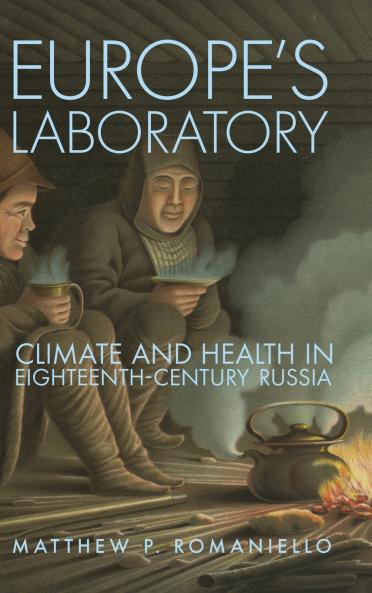
<p><b><i>Europe's Laboratory </i></b><b>is a history of eighteenth-century naturalists and physicians who were involved in the creation of a classification system for the people of the Russian Empire.</b> These Enlightened scholars traveled through Russia describing its people landscape and customs. In an era when climate was seen as a significant factor affecting health and bodies these men wondered: How did the Russians a cold people--phlegmatic or melancholic according to humoral theory--manage an empire? </p><p>Russia's empire as Matthew P. Romaniello shows contradicted the medical knowledge reflecting centuries of experimentation and practice. In solving this riddle naturalists and physicians would unlock the secret of Russia's success and create a typology of imperial bodies a guide toward managing the empire's diversity to prepare Russia for greater successes in the nineteenth century. Rather than an underpopulated region of unambitious people eighteenth-century Russia was a dynamic empire that mastered skills to support settler colonialism in climates unfamiliar to other Europeans.<i> Europe's Laboratory</i> makes a significant contribution to the most understudied era of Russian history while engaging the broader global debates on the formation of race theory in colonial contexts.</p>

Piracy-free

Assured Quality

Secure Transactions

Fast Delivery

Sustainably Printed
Details
ISBN 13
9781501783920
Publication Date
-01-10-2025
Pages
-264
Weight
-450 grams
Dimensions
-152x229x19.05 mm
