

English


₹3039
(All inclusive*)
Paperback
Delivery Options
Please enter pincode to check delivery time.
*COD & Shipping Charges may apply on certain items.
Review final details at checkout.
Looking to place a bulk order? SUBMIT DETAILS
Delivery Options
Please enter pincode to check delivery time.
*COD & Shipping Charges may apply on certain items.
Review final details at checkout.
About The Book
Description
Author
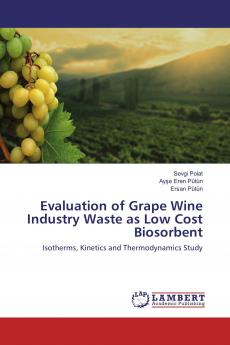
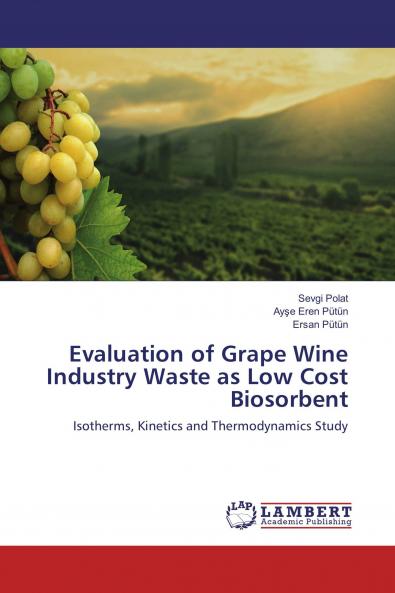
Grape residue generated in the grape wine production after pressing process were used as biosorbent material for the removal of heavy metals as cobalt(II) copper(II) manganese(II) and dyes as methylene blue (MB) Rhodamine-B (RhB) and methyl orange (MO) from aqueous solutions. The influences of pH biosorbent dosage initial metal ion concentration contact time and solution temperature were studied in batch mode. Langmuir Freundlich and Temkin isotherm models were used to model the experimental equilibrium data. Experimental data were also used for determining the biosorption kinetics using pseudo-first order and pseudo-second order kinetic models. Also thermodynamic parameters were calculated to predict the nature of were calculated to predict the nature of biosorption. All results showed that grape residue can be used as an alternative effective low-cost and environmentally friendly biosorbent for removal of both heavy metals and toxic dyes from aqueous media.

Piracy-free

Assured Quality

Secure Transactions

Fast Delivery

Sustainably Printed
Details
ISBN 13
9783659857157
Publication Date
-07-03-2016
Pages
-60
Weight
-91 grams
Dimensions
-150x220x3.68 mm
