

English


Paperback
₹5772
(All inclusive*)
Delivery Options
Please enter pincode to check delivery time.
*COD & Shipping Charges may apply on certain items.
Review final details at checkout.
Looking to place a bulk order? SUBMIT DETAILS
Delivery Options
Please enter pincode to check delivery time.
*COD & Shipping Charges may apply on certain items.
Review final details at checkout.
About The Book
Description
Author
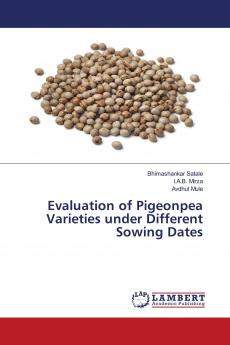
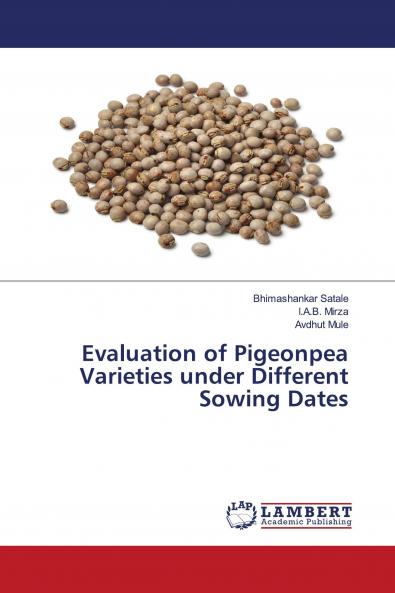
Pigeonpea also known as red gram arhar and tur [Cajanus cajan (L.) Millsp.] is the most important kharif grain legume crop belongs to the family Leguminoseae originated from the Africa. Time of sowing a non-monetary input has a considerable influence on growth and yield of this crop. It ensures the complete harmony between vegetative and reproductive phases on one hand and climatic rhythm on the other hand. Sowing time also plays an important role in dry matter accumulation by the crop. Early sown crop may accumulate excessive dry matter and reduce podding where as late sown crop may reduce the biomass accumulation and consequently reduction in yield. Delayed sowings beyond the optimum period result in low grain yields of pigeonpea. Further genotypes may vary in productivity and are equally important in realizing the potential yield of this crop. Long duration genotypes produce higher yield than early maturing genotypes but they take more time to mature which may delay the sowing of succeeding crop such as wheat in a sequence cropping system. Keeping all these factors in mind the present experiment was conducted during 2015.

Piracy-free

Assured Quality

Secure Transactions

Fast Delivery

Sustainably Printed
Details
ISBN 13
9786204208527
Publication Date
-05-10-2021
Pages
-96
Weight
-136 grams
Dimensions
-150x220x5.53 mm
