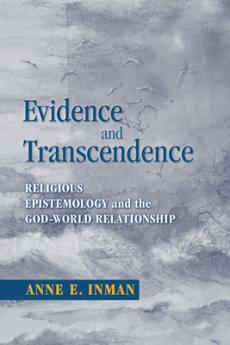
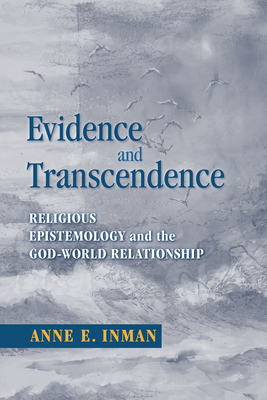
Evidence and Transcendence
English

About The Book

<p>In <i>Evidence and Transcendence</i> Anne Inman critiques modern attempts to explain the knowability of God and points the way toward a religious epistemology that avoids their pitfalls. Christian apologetics faces two major challenges: the classic Enlightenment insistence on the need to provide evidence for anything that is put forward for belief; and the argument that all human knowledge is mediated by finite reality and thus no knowledgeof a being interpreted as completely other than finite reality is possible. </p><p>Modern Christian apologists have tended to understand their task primarily if not exclusively in terms of one of these challenges. As examples of contemporary rationalist and postliberal approaches Inman analyzes in depth the religious epistemologies of philosopher Richard Swinburne and theologians George Lindbeck and Ronald Theimann. She concludes that none of their positions is satisfactory because none can uphold the notion of God's transcendence while at the same time preserving a sound account of our claims to freedom and knowledge.</p><p>The root cause of such failures Inman argues is an inadequate philosophy of God and of the relation of God and the finite world. Her exploration of the theologies of Karl Rahner and Friedrich Schleiermacher provides the material for the constructive work in this book. Against rationalist and postliberal epistemologies Inman calls for an austere grounding of Christian faith in the claim that God is known in human conscious activity as such as the other that grounds the finite.</p>
Piracy-free
Piracy-free
Assured Quality
Assured Quality
Secure Transactions
Secure Transactions
Delivery Options
Please enter pincode to check delivery time.
*COD & Shipping Charges may apply on certain items.
Review final details at checkout.
downArrow

Details


LOOKING TO PLACE A BULK ORDER?CLICK HERE