

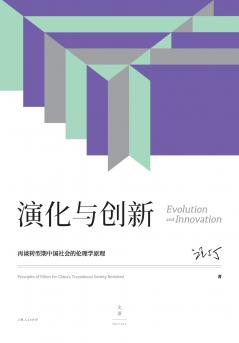
by
汪丁丁
Chinese


Paperback
₹4576
₹5895
22.37% OFF
(All inclusive*)
Delivery Options
Please enter pincode to check delivery time.
*COD & Shipping Charges may apply on certain items.
Review final details at checkout.
Looking to place a bulk order? SUBMIT DETAILS
Delivery Options
Please enter pincode to check delivery time.
*COD & Shipping Charges may apply on certain items.
Review final details at checkout.
About The Book
Description
Author
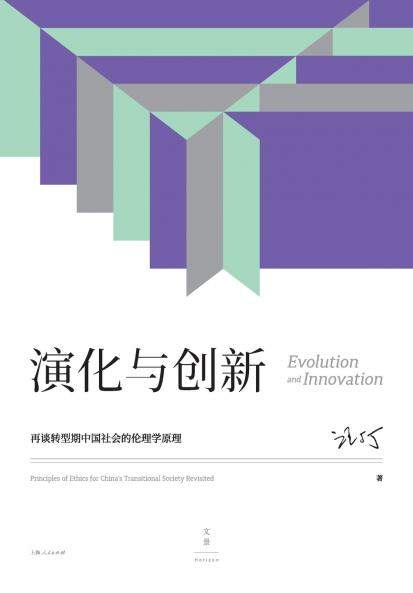
<p>Derived from the author's EMBA course at Peking University's NSD this book presents a new evolutionary ethics grounded in empirical science contrasting with Western scholarship constrained by normative philosophy. Adopting an interdisciplinary approach it traces the evolution of Earth life societies and ethics-focusing particularly on homeostatic states within living systems. During China's transformative era AI exerts unparalleled societal impact. Within 20 years humans lacking innovation capacity will likely be replaced by machines making innovation everyone's core value. Future ethics must therefore activate innate human innovation potential-culminating in the author's innovation ethics. China's ongoing economic political and cultural evolution chiefly represents expanding cooperative order. Thus the central ethical question becomes how cooperation becomes possible distilled into three elements: commitment tolerance (the rarest) and justice.</p><p>本书出自作者为北大国发院开设的EMBA课程。西方学者阐述的演化伦理学始终难以摆脱哲学的规范视角,而作者更愿意在科学的实证视角下阐述演化伦理学,故而,在浏览了西方文献之后,决定编写一部新的演化伦理学。在一贯的跨学科视角下,本书首先讲述地球的演化史与生命的演化史,其次是社会的演化与伦理的演化,尤其侧重于生命系统各层级各子系统的内平衡态。在中国社会的转型期的目前阶段,对人类生活影响最大的是人工智能技术。未来的20年,任何不从事创新的人类成员,以极高的概率将被机器智能取代。这意味着创新能力将成为每一个人的核心价值。有鉴于此,未来伦理学应是关于如何激发每一个人潜在创新能力的伦理学。于是在最后一讲,作者讲解了自己的创新伦理学。转型期中国社会的经济发展、政治演化、文化变迁,很大程度上是合作秩序的扩展问题,也就是说转型期中国社会的伦理学乃至群体创造性的问题意识,都是合作何以可能,作者将这一伦理学原理表达为合作伦理三要素--承诺、宽容、正义,其中又以宽容最难获得。</p>

Piracy-free

Assured Quality

Secure Transactions
Details
ISBN 13
9787208185067
Publication Date
-01-10-2023
Pages
-600
Weight
-956 grams
Dimensions
-170x244x41.41 mm
