


English


Paperback
₹1404
(All inclusive*)
Delivery Options
Please enter pincode to check delivery time.
*COD & Shipping Charges may apply on certain items.
Review final details at checkout.
Looking to place a bulk order? SUBMIT DETAILS
Delivery Options
Please enter pincode to check delivery time.
*COD & Shipping Charges may apply on certain items.
Review final details at checkout.
About The Book
Description
Author
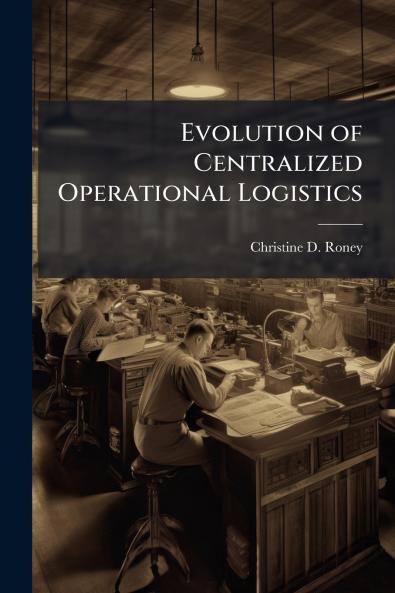
<p>This monograph describes the evolution of logistics management at the operational level since the end of the Second World War. Examining the history of how the Department of Defense has organized itself at the operational level to manage logistics in conflicts over the last 50 years will allow sustainment planners to implement the optimal level of centralization in future conflicts. Since the Second World War the American military has increasingly centralized the management of logistics in order to increase efficiency and reduce overall costs. This monograph demonstrates the increased centralization through the examination of the core logistics functions of supply maintenance operations and deployment and distribution during the Vietnam War Operation DESERT STORM and Operation IRAQI FREEDOM. Since World War II the services have sought the most efficient method to sustain their forces during combat operations on multiple continents far from the industrial base. The Department of Defense has implemented varying degrees of control in the management of common user logistics since 1970 from requiring each service to be responsible for managing their own logistical requirements to centralizing the management of common user items across the services stopping short of creating a unified logistics command. With inevitable decreases in personnel and funding in the near future and reliance on increased joint operations it is imperative that the services implement the most efficient management method in order to support combat operations. The trend of increasing centralization of logistics management is evident in the examination of the Vietnam War Operations DESERT STORM and Operation IRAQI FREEDOM but inefficiencies still exist. This monograph recommends that the Department of Defense continue to centralize its logistics management structure to increase synchronization between the services and create further efficiencies. The Department of Defense must assign res</p><p>This work has been selected by scholars as being culturally important and is part of the knowledge base of civilization as we know it. This work was reproduced from the original artifact and remains as true to the original work as possible. Therefore you will see the original copyright references library stamps (as most of these works have been housed in our most important libraries around the world) and other notations in the work.</p><p>This work is in the public domain in the United States of America and possibly other nations. Within the United States you may freely copy and distribute this work as no entity (individual or corporate) has a copyright on the body of the work.</p><p>As a reproduction of a historical artifact this work may contain missing or blurred pages poor pictures errant marks etc. Scholars believe and we concur that this work is important enough to be preserved reproduced and made generally available to the public. We appreciate your support of the preservation process and thank you for being an important part of keeping this knowledge alive and relevant.</p>

Piracy-free

Assured Quality

Secure Transactions

Fast Delivery

Sustainably Printed
Details
ISBN 13
9781288249923
Publication Date
-09-11-2012
Pages
-52
Weight
-89 grams
Dimensions
-156x234x2.74 mm
