

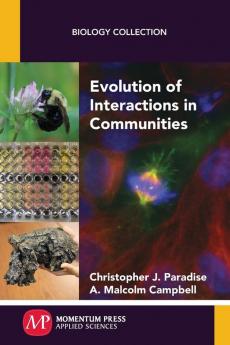
English
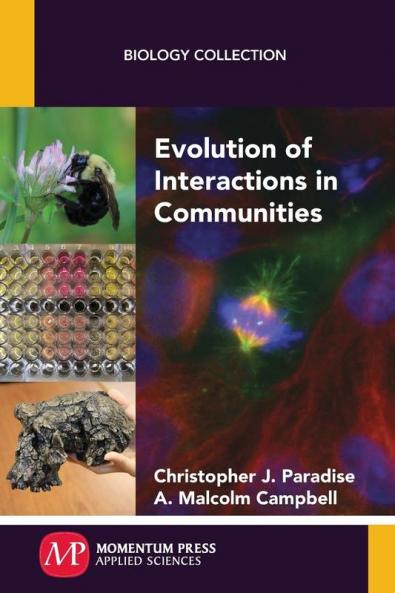


Paperback
₹6184
₹7678
19.46% OFF
(All inclusive*)
Delivery Options
Please enter pincode to check delivery time.
*COD & Shipping Charges may apply on certain items.
Review final details at checkout.
Looking to place a bulk order? SUBMIT DETAILS
Delivery Options
Please enter pincode to check delivery time.
*COD & Shipping Charges may apply on certain items.
Review final details at checkout.
About The Book
Description
Author(s)
Pairwise and diffuse coevolution are defined with examples that include mutualisms and predator-prey interactions. In any example of coevolution the costs and benefits to both species involved in the interaction must be assessed in order to understand evolution of the interaction. Models to explain coral bleaching are examined in the context of a coevolutionary mutualism as are the implications for the possible extinction of coral reefs. Data are examined in order to determine which model is best supported. Other examples of how evolution affects interactions and communities of organisms include adaptation to living in particular habitats and evolution to frequent and somewhat predictable disturbances. For the former physiological adaptations possessed by some plants to live in low light conditions are described and assessed. Ecological disturbances are defined and the role of disturbance on evolution of ecological systems is assessed through the use of data. Finally how time and spatial scales affect disturbances and the evolutionary responses of organisms to disturbances are also examined.

Piracy-free

Assured Quality

Secure Transactions

Fast Delivery

Sustainably Printed
Details
ISBN 13
9781606509678
Publication Date
-27-04-2016
Pages
-68
Weight
-106 grams
Dimensions
-152x229x3.58 mm
