


English



Hardback
₹7118
(All inclusive*)
Delivery Options
Please enter pincode to check delivery time.
*COD & Shipping Charges may apply on certain items.
Review final details at checkout.
Looking to place a bulk order? SUBMIT DETAILS
Delivery Options
Please enter pincode to check delivery time.
*COD & Shipping Charges may apply on certain items.
Review final details at checkout.
About The Book
Description
Author(s)
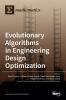
<p>Evolutionary algorithms (EAs) are population-based global optimizers which due to their characteristics have allowed us to solve in a straightforward way many real world optimization problems in the last three decades particularly in engineering fields. Their main advantages are the following: they do not require any requisite to the objective/fitness evaluation function (continuity derivability convexity etc.); they are not limited by the appearance of discrete and/or mixed variables or by the requirement of uncertainty quantification in the search. Moreover they can deal with more than one objective function simultaneously through the use of evolutionary multi-objective optimization algorithms. This set of advantages and the continuously increased computing capability of modern computers has enhanced their application in research and industry. From the application point of view in this Special Issue all engineering fields are welcomed such as aerospace and aeronautical biomedical civil chemical and materials science electronic and telecommunications energy and electrical manufacturing logistics and transportation mechanical naval architecture reliability robotics structural etc. Within the EA field the integration of innovative and improvement aspects in the algorithms for solving real world engineering design problems in the abovementioned application fields are welcomed and encouraged such as the following: parallel EAs surrogate modelling hybridization with other optimization techniques multi-objective and many-objective optimization etc.</p>

Piracy-free

Assured Quality

Secure Transactions

Fast Delivery

Sustainably Printed
Details
ISBN 13
9783036527147
Publication Date
-08-03-2022
Pages
-314
Weight
-614 grams
Dimensions
-170x244x25.4 mm
