


English




Paperback
₹4709
₹6141
23.32% OFF
(All inclusive*)
Delivery Options
Please enter pincode to check delivery time.
*COD & Shipping Charges may apply on certain items.
Review final details at checkout.
Looking to place a bulk order? SUBMIT DETAILS

Piracy-free

Assured Quality

Secure Transactions
About The Book
Description
Author
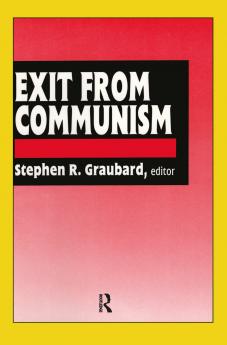
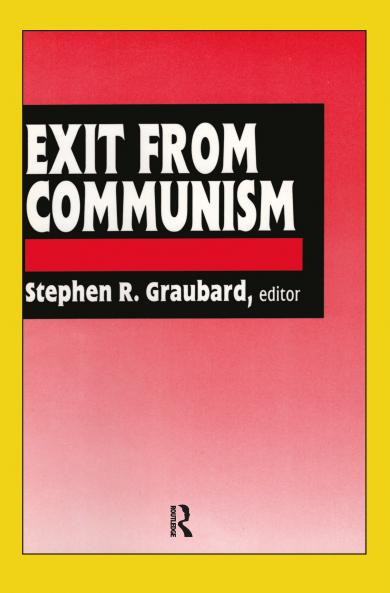
<p>Since 1989 it has been possible to review what has been published both at home and abroad on the communist states of Central and Eastern Europe and no less importantly on the Soviet Union itself from a new perspective. Few have chosen to engage in this Herculean task whether out of a residual civility in not wishing to mock certain aging scholars whose research would appear curiously dated or out of a sense of fatigue with the whole subject of casting aspersions on mistaken views. <i> A New Europe for the Old?</i> asks whether the master narratives that circulated so widely in the West in the half-century since 1945 remain valid. <br><br>Stephen Graubard's volume raises pertinent questions regarding the current state of the European world as it has evolved since 1989. He includes contributions from important scholars around the world: A New Europe for the Old? by Martin Malia; The Serbs: The Sweet and Rotten Smell of History by Tim Judah; Illyrianism and the Croatian Quest for Statehood by Marcus Tanner; To Be or Not to Be Balkan: Romania's Quest for Self-Definition by Tom Gallagher; Ukraine: From an Imperial Periphery to Sovereign State by Roman Szporlunk; Ethnic Nationalism in the Russian Federation by Anatoly M. Khazanov; Im Osten viel Neues: Plenty of News from the Eastern Lnder by Barbara Ischinger; Discourse and (Dis)Integration in Europe: The Cases of France Germany and Great Britain by Vivien A. Schmidt; The European Debate on Citizenship by Dominique Schnapper; Has the Nation Died? The Debate Over Italy's Identity (and Future) by Dario Biocca; and Postwar Europe by Arne Roth.<br><br><i>A New Europe for the Old?</i> provides greater sympathy for the complexity of societies and argues for greater tolerance of those that are small and that do not cast a long shadow in the world of today. In the twenty-first as in the twentieth century they may be engines of change both as a result of the disorder that they produce as well as the ways in which their values however seemingly antiquated survive and prosper and not only in their native lands. This volume will intrigue historians and European studies scholars alike.<br><br><i>Stephen R. Graubard<i> is editor of the American Academy of Arts and Sciences and its journal <i>Daedalus</i> and professor of humanities at Brown University.</i></i></p>
Piracy-free
Assured Quality
Secure Transactions
Delivery Options
Please enter pincode to check delivery time.
*COD & Shipping Charges may apply on certain items.
Review final details at checkout.
Details
ISBN 13
9781560006947
Publication Date
-30-01-1993
Pages
-304
Weight
-414 grams
Dimensions
-151.89x229.11x16.22 mm
