



English




₹5526
₹6141
10.01% OFF
(All inclusive*)
Paperback
Delivery Options
Please enter pincode to check delivery time.
*COD & Shipping Charges may apply on certain items.
Review final details at checkout.
Looking to place a bulk order? SUBMIT DETAILS
Delivery Options
Please enter pincode to check delivery time.
*COD & Shipping Charges may apply on certain items.
Review final details at checkout.
About The Book
Description
Author
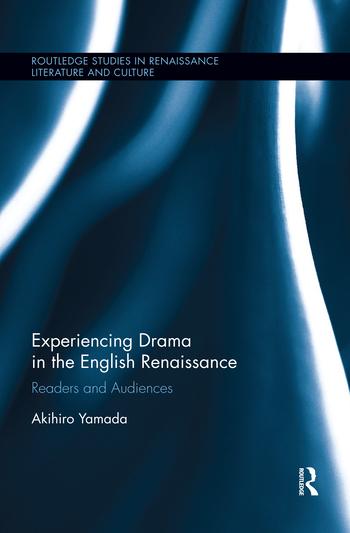
<p>This book investigates the complex interactions through experiencing drama of readers and audiences in the English Renaissance.</p><p>Around 1500 an absolute majority of population was illiterate. Henry VIII’s religious reformation changed this cultural structure of society. ‘The Act for the Advancement of True Religion’ of 1543 which prohibited the people belonging to the lower classes of society as well as women from reading the Bible rather suggests that there already existed a number of these folks actively engaged in reading. The Act did not ban the works of Chaucer and Gower and stories of men’s lives – good reading for them. The successive sovereigns’ educational policies also contributed to rising literacy.</p><p>This trend was speeded up by London’s growing population which invited the rise of commercial playhouses since 1567. Every citizen saw on average about seven performances every year: that is about three per cent of London’s population saw a performance a day. From 1586 onwards merchants’ appearance in best-seller literature began to increase while stage representation of reading/writing scenes also increased and stimulated audiences towards reading. This was spurred by standardisation of the printing format of playbooks in the early 1580s and play-minded readers went to playbooks eventually to create a class of playbook readers. Late in the 1590s at last playbooks matched with prose writings in ratio to all publications.</p><p>Parts I and II of this book discuss these topics in numerical terms as much as possible and Part III discusses some monumental characteristics of contemporary readers of Chapman Ford Marston and Shakespeare.</p>

Piracy-free

Assured Quality

Secure Transactions

Fast Delivery

Sustainably Printed
Details
ISBN 13
9780367359027
Publication Date
-31-07-2019
Pages
-296
Weight
-404 grams
Dimensions
-151.89x229.11x15.81 mm
